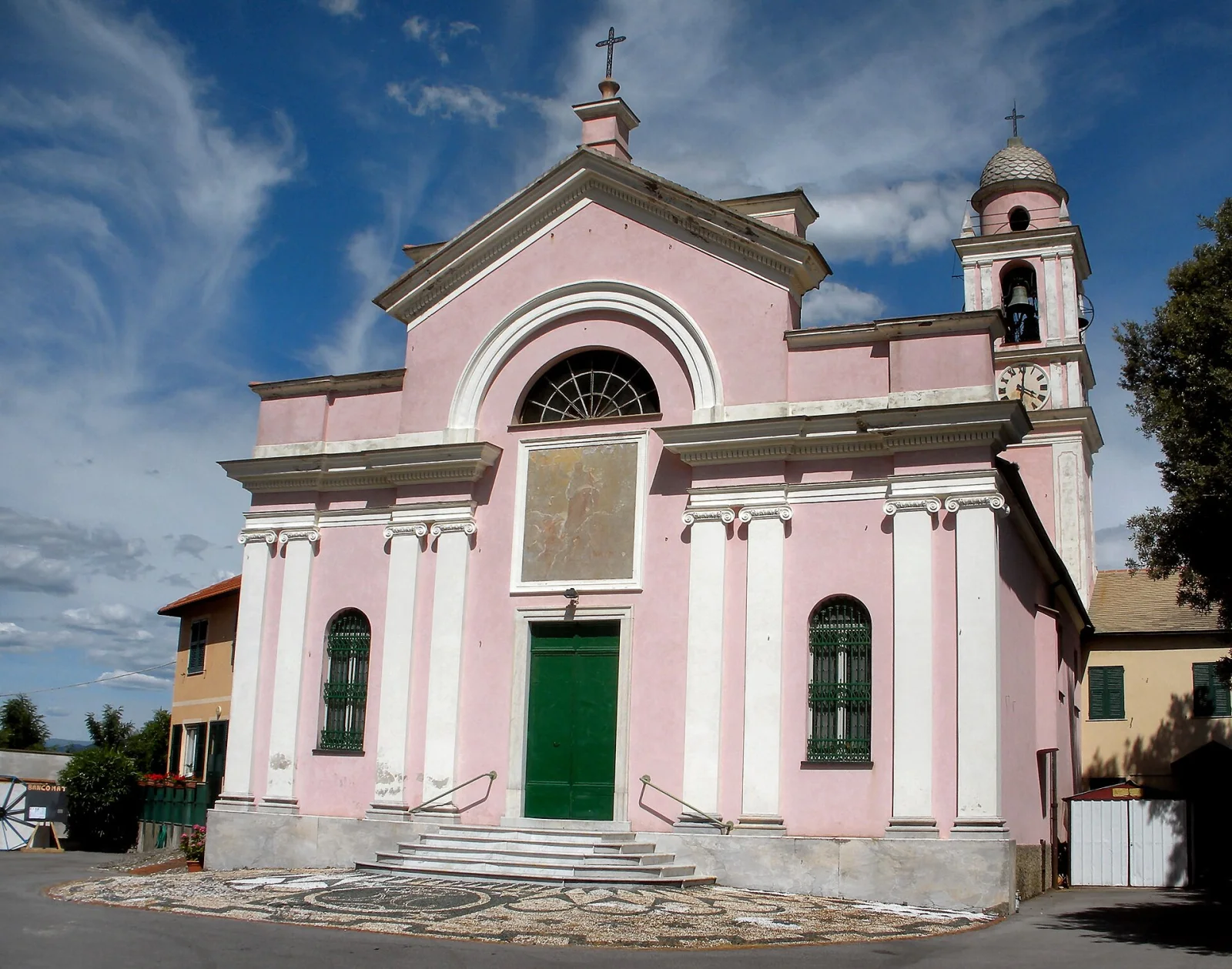
The altars of this church have written on them the date when they changed saint. The one on the right has been dedicated to saint Gregory since 1735, the one on the left to saint Apollonia since 1821: before that they belonged to somebody else. Devotion is not eternal, it has an inventory and dates, and in a village church you read them on the marble.
What to see
The interior has three naves, divided by heavy marble pillars. In the presbytery an altarpiece with the apostle Bartholomew, the titular saint, dominates the room. There are three marble altars: the high one, dedicated to the Ascension, has a tabernacle datable to the late eighteenth century, and in the Rosary chapel there is a marble statue of the Virgin.
A church at Livellato is documented perhaps as early as the middle of the twelfth century. The most useful description is the one left by the visit of cardinal Stefano Durazzo of Genoa in the mid seventeenth century: it is detailed, and a century later another description confirms the structure had not changed. Pastoral visits are often the only photograph we have of these buildings.
Visiting
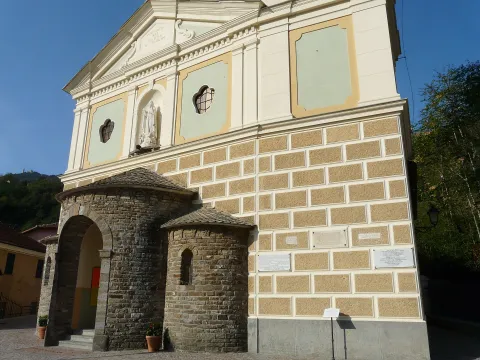
The church is in the hamlet of Livellato, on the heights of the municipality of Ceranesi, in the Genoese hinterland; it is a parish church and opens for services. Twenty minutes.
Our editors' tip
Look for the altar of saint Apollonia. She is the saint invoked against toothache, because in the account of her martyrdom her teeth were broken. Before dentists, a whole category of pain had an altar like this one as its only address: in front of that marble people prayed for something very concrete.