In a side street below the fortress, two hundred metres from the ducal palace everyone comes to Urbino for, there is a rectangular room with its walls covered in frescoes by the brothers Lorenzo and Jacopo Salimbeni: one of the summits of Italian late gothic painting. The cycle was completed by 1416, and hardly anyone queues to see it.
What to see
The end wall is taken up by an enormous Crucifixion, crowded with soldiers, horses, onlookers and figures that turn towards the viewer: many of those faces are portraits of the people of Urbino of the time. On the other walls run the stories of the Baptist, painted with bright colours, embroidered fabrics and the minute detail that is the signature of that season.
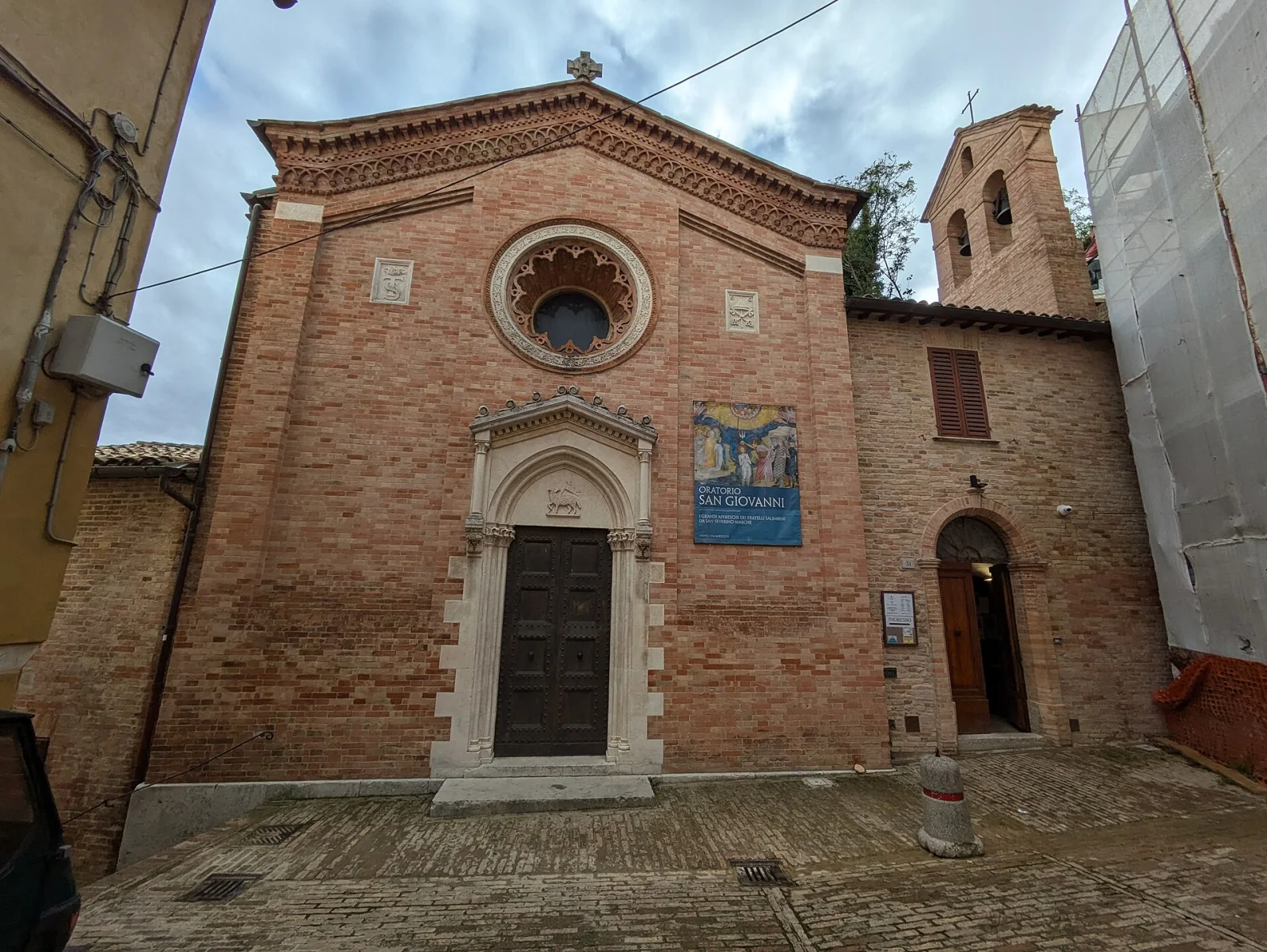
The oratory was the seat of a confraternity of laymen who ran a hospital for the sick and for pilgrims: the first records are of 1365, and the building was finished in 1393. The neo-gothic front, instead, is of the early twentieth century, added when the oratory took in the neighbouring confraternities.
Visiting
The oratory is in via Barocci, five minutes on foot downhill from the ducal palace; a cheap ticket, limited hours and midday closing, so it is worth checking. Half an hour.
Our editors' tip
Look at the dates: these frescoes are of a generation before Piero della Francesca arrived in Urbino with his geometry. The city that produced the perspective of the Renaissance already had, before that, this crowded narrative painting. The two things stand a few steps apart and do not resemble each other at all.