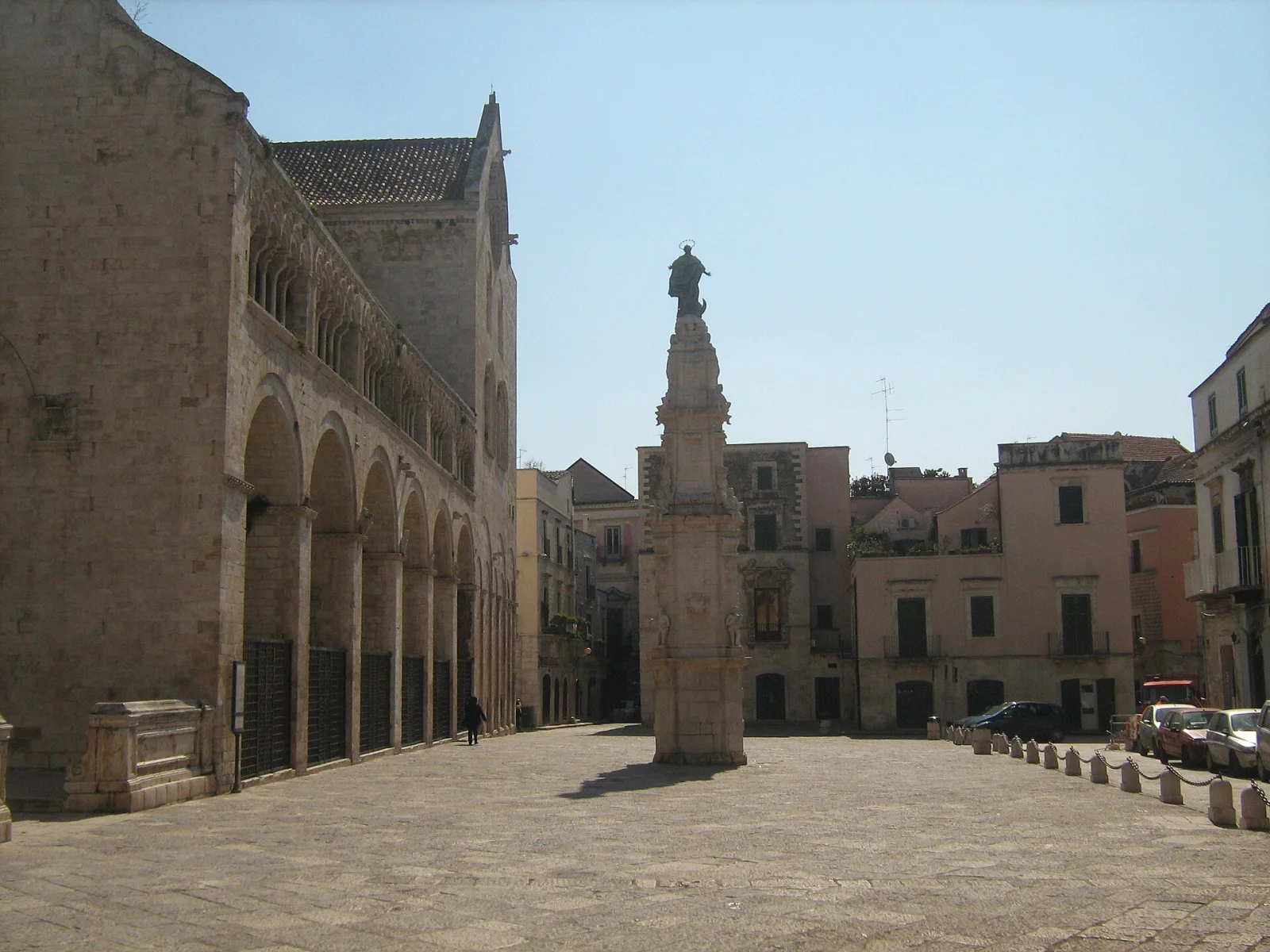
The «Aurelio Marena» Diocesan Museum is the museum of the archdiocese of Bari-Bitonto. Created between 1969 and 1970, it gathers the artistic treasures of the co-cathedral of Bitonto and of many other churches of the Bitonto area. The rich collection, previously housed in the bishop's curia, is now in the former bishop's seminary attached to the church of San Francesco della Scarpa.
What to see
The museum has a roof garden and holds more than two thousand five hundred pieces which, according to the sources, make it the largest diocesan museum of the Mezzogiorno. The first floor is devoted to Apulian painting of the nineteenth and twentieth centuries; there are also Sèvres vases and sacred furnishings of the nineteenth and twentieth centuries. In the display case between the first and second rooms are pre-classical artefacts found at the prehistoric sites of the neighbouring towns, while particularly precious are the silverwork of Neapolitan manufacture, some of the fifteenth and sixteenth centuries, kept in the room of that name, with liturgical vestments (stoles embroidered in pure gold) and a lapidary with decorative elements of Romanesque architecture, including an inlaid pluteus and a capital with tendril decoration.
The second floor is devoted to paintings of the seventeenth and eighteenth centuries, with also sculptures of the fifteenth and seventeenth. Of particular interest are a Byzantine wooden icon of the Virgin, datable to the twelfth century, and a fourteenth-century crucifix of the Umbrian school; also to be seen are frescoes from the church of San Leucio vecchio, a Madonna and Child attributed to the Flemish painter Anthony van Dyck, a stone nativity scene assigned by some to Stefano da Putignano and by others to Nuzzo Barba of Galatina, a gilded wooden statue of Saint Gregory the Great, the Adoration of the Shepherds by Marco Pino, of 1576, and a Flagellation by the local painter Giuseppe della Porta, of the first half of the eighteenth century. On the third floor are the works of the artists of the seventeenth-century Bitonto school, such as Alonso de Corduba, Carlo Rosa, Nicola Gliri and Francesco Altobelli: outstanding are a canvas by Carlo Rosa with the Virgin and the protector saints of Bitonto, commissioned as an ex-voto in 1656, a Christ and the Samaritan Woman by the same painter and an Annunciation by Friar Giovanni da Bitonto.
Visiting
The museum is in the former bishop's seminary attached to the church of San Francesco della Scarpa, in Bitonto. The sources consulted give no opening hours or visiting arrangements: check them.
Our editors' tip
The original canvases of the church of Santa Maria del Popolo, also in Bitonto, are now kept in the diocesan museum.


