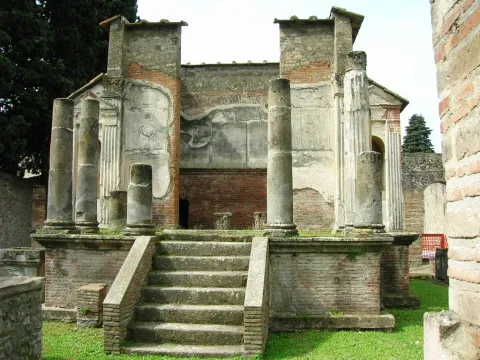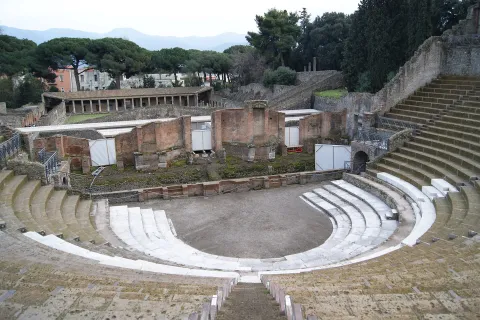
On the day of the eruption the busiest baths in Pompeii were closed for works. The earthquake of 62 had damaged them, the site was still open when Vesuvius woke, and the building went under the ash exactly as it was, halfway through a restoration. They are the oldest baths in the town: the first structures go back four centuries before the Christian era.
What to see
At the centre is the colonnaded palaestra, its columns coated in thick stucco after the quake to set them upright again. To the west the swimming pool, with two smaller basins where athletes washed; to the east the bathing rooms, divided into a men's and a women's section, each with its warm and hot rooms, the women having no way through to the palaestra at all.
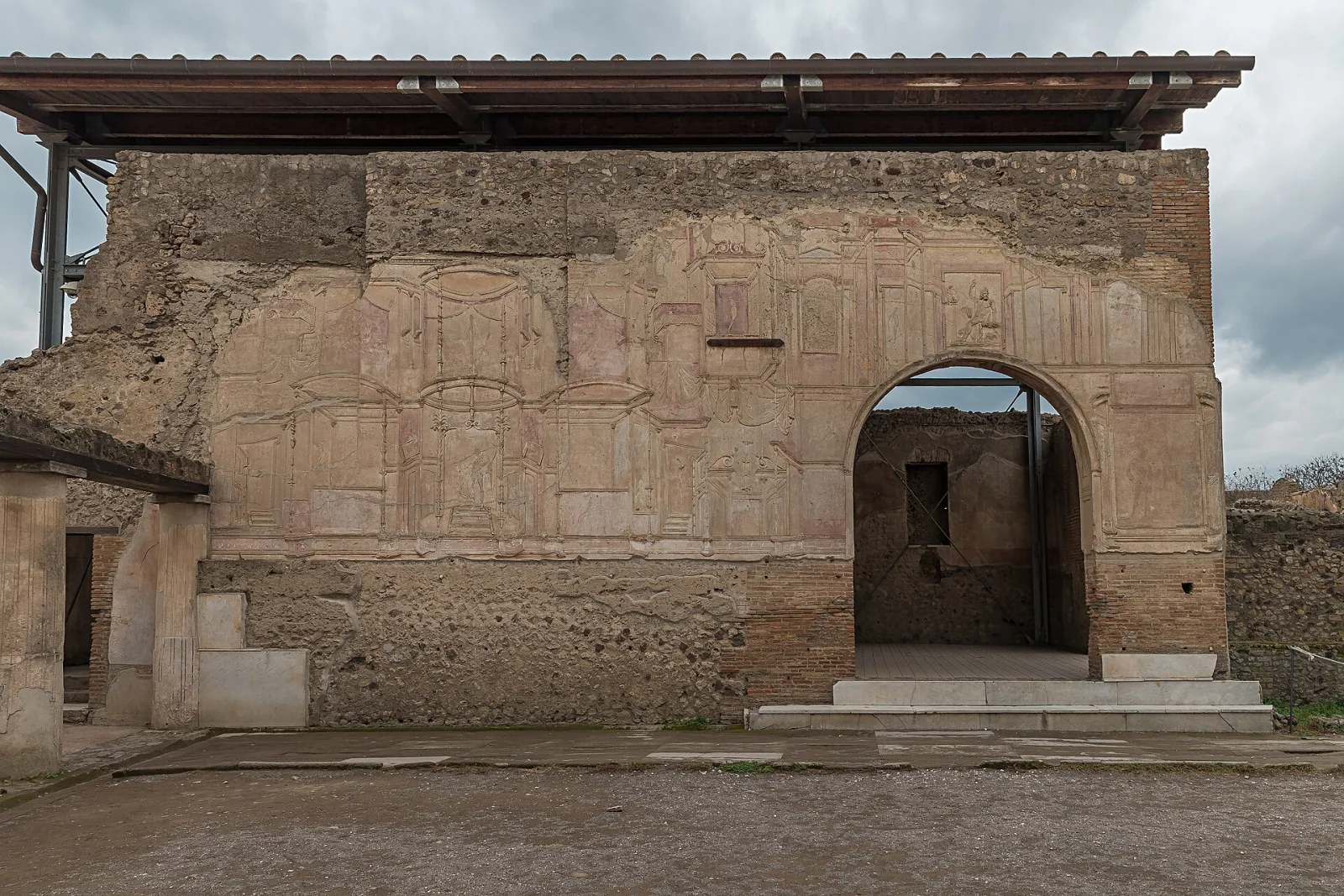
The floor of the hot rooms rested on piles of bricks, so that air heated by the furnaces passed underneath and rose into the cavities in the walls: this is Roman heating, and here you see it taken apart. The stuccoes of the entrance and the portico survive, with Jupiter seated, Daedalus building the wings for Icarus and Hylas carried off by the nymphs, and in the men's changing room the cupids and the arms.
Visiting
The baths are at the crossing of via dell'Abbondanza and via Stabiana, in the middle of the excavations, ten minutes from the porta Marina entrance; you go in with the archaeological park ticket, and some rooms may be closed in rotation. Three quarters of an hour.
Our editors' tip
Look for the little brick pillars under the collapsed floor of the hot rooms: they are the height of a forearm and served to hold the floor suspended over emptiness. Looking into that gap is the most concrete way to grasp that the Romans heated buildings from below, and that this was not a tub but a machine.