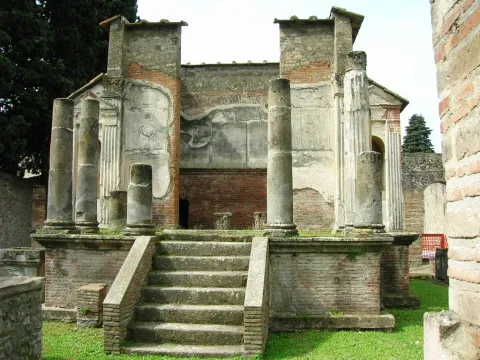
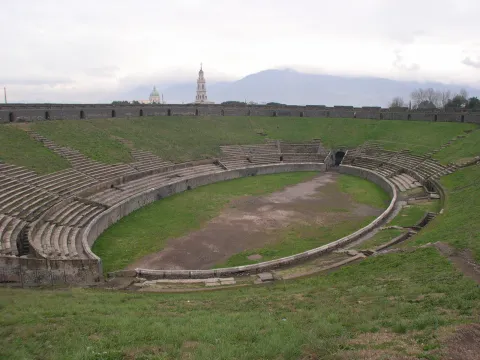
The theatre of Pompeii does not rest on built substructures like later Roman ones: it is cut into the flank of the hill, in the Greek way of using the natural slope. It was built in the Samnite period, that is before the town became Roman, and it held about five thousand people, a figure that tells you how large this provincial city really was.
What to see
You can make out the three bands of seating, the access corridors, the semicircular orchestra and the foundations of the stage. Above the cavea ran the stone rings into which the poles of the awning against the sun were slotted. Behind the theatre opens the great quadriporticus, which was the audience's foyer and which after the earthquake was turned into the gladiators' barracks.
The great refurbishment came in the Augustan age, paid for by the Holconii family, who grew vines at Pompeii and had themselves remembered with a plaque in the theatre. Comedies, mimes and pantomimes were given here, and the atellanae, the Italic popular farce with its fixed masks: not Greek tragedy, but comic theatre people understood.
Visiting
The theatre is in the southern part of the site, near the triangular forum and the small theatre; the visit is covered by the Pompeii ticket. Half an hour. In summer evening performances are held here, and seeing one is a different way of seeing the place.
Our editors' tip
Climb to the top row and sit down: from up there you see the stage, the town behind it and the outline of Vesuvius beyond. Then try speaking in a normal voice towards the bottom and have someone in the orchestra listen. The acoustics still work, and that is what makes clear this is not a ruin but a machine.