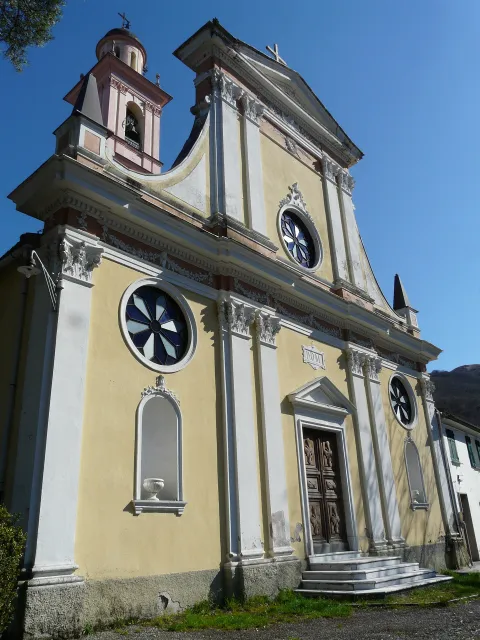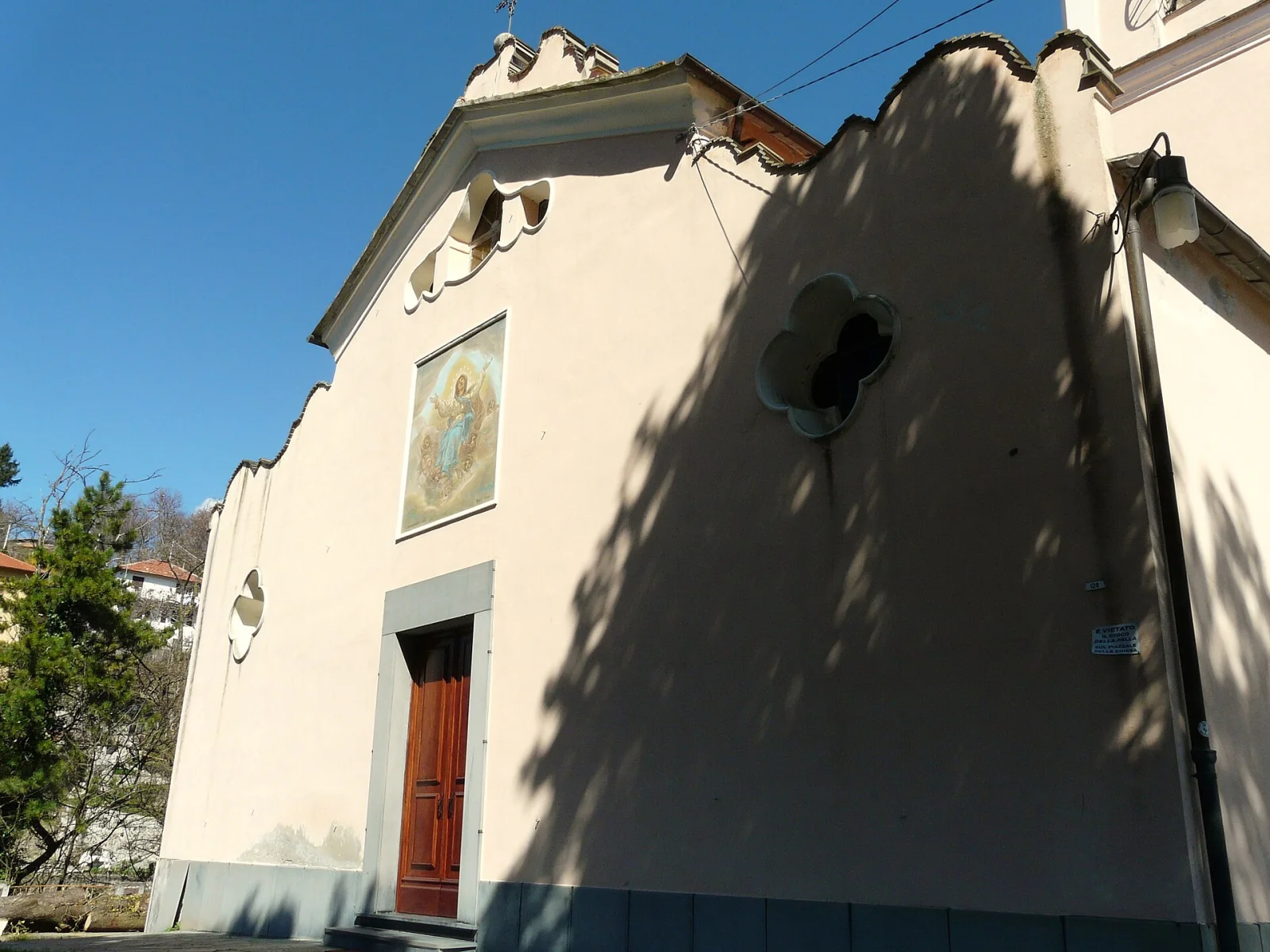
A tenth-century reference already has it standing in 935, which is enough to place it among the oldest parish churches in Liguria; papers left by a local priest, never official and never verifiable, push the date back to 667. However you count, people have been praying on this spot in the Bisagno valley for more than a thousand years, and the building you see today is the result of a fifteenth-century rebuilding.
What to see
The interior is divided into three naves, a layout that dates from the fifteenth-century works, when the church was largely remade. Outside, the piece that matters is the bell tower, and it was not built only to ring. In the Middle Ages it served as a stronghold against barbarian raids, and its bulk makes more sense against that job than against the bells.
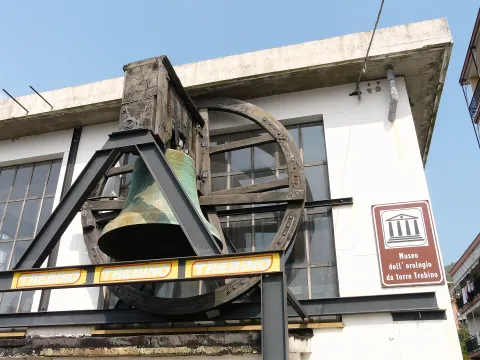
The tower went up in 1237, paid for by a bequest made for exactly that purpose. Its present height, some thirty metres, came much later: in 1789 it was raised, the church was plastered, and the cypresses that still shade the forecourt were planted. The first clock appeared ten years afterwards, in 1799, the second in 1840. The peal of six bells in B flat 2, ascending, was blessed in July 1912; between 1926 and 1927 the floor was relaid and the small shrine to the Assumption was built, and in the nineteen-seventies the foundations were worked on, with a last intervention in 1975.
Visiting
The church stands in piazza Conciliazione, in the centre of Bargagli, just above Genoa up the Bisagno valley. It is the parish church of the village, seat of the Medio-Alto Bisagno vicariate of the archdiocese of Genoa: which means a working church rather than a monument with a ticket desk, and that the safest opening times remain those of services. The forecourt in front, with its cypresses, is wide enough to let you look at the façade and the tower without pressing your back to a wall.
Our editors' tip
We turn up shortly before a weekday mass: it is the simplest way to find the door open without getting in anyone's way, and to hear the six bells working rather than look at them from outside. Then we stay on the forecourt: the cypresses and the tower have stood together for more than two centuries, and it is the one view that tells you what this church has been, place of worship and garrison in the same wall.