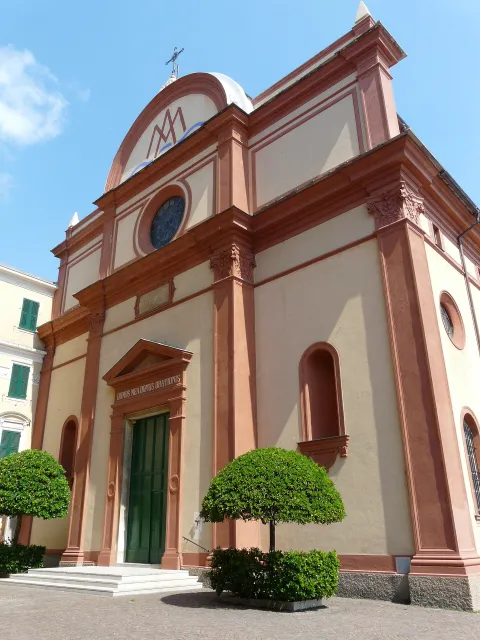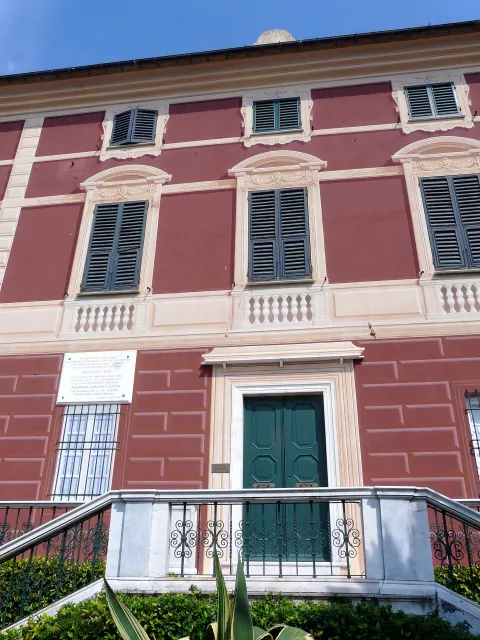
Eight bombs fell on Villa Bianchi on 4 June 1944. The house dates from the nineteenth century and carries the name of the family that built it, the Bianchi, wealthy landowners of Cogoleto: it stands in the locality of Isorella, on the shore east of the town, just before Villa Durazzo. The spot, though, has a longer story than the house. Local research places the monastery of San Pietro right here, of which no visible trace survives: it appears in a parchment dated 1356, so badly damaged as to be nearly illegible.
What to see
What you see is the nineteenth-century front and the position, which is the reason the villa was built there in the first place: a strip of shoreline east of the town, outside the old quarter and facing the water. The date of 4 June 1944 accounts for the rest. Cogoleto had already been hit on 30 October 1943 by an American raid that killed fifteen people, aged between four and seventy-two; the following year it was this stretch of coast that paid, and the villa took eight bombs in one go.
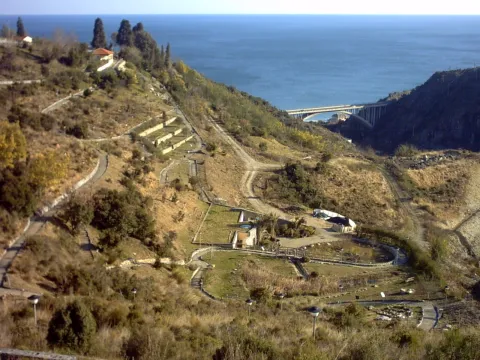
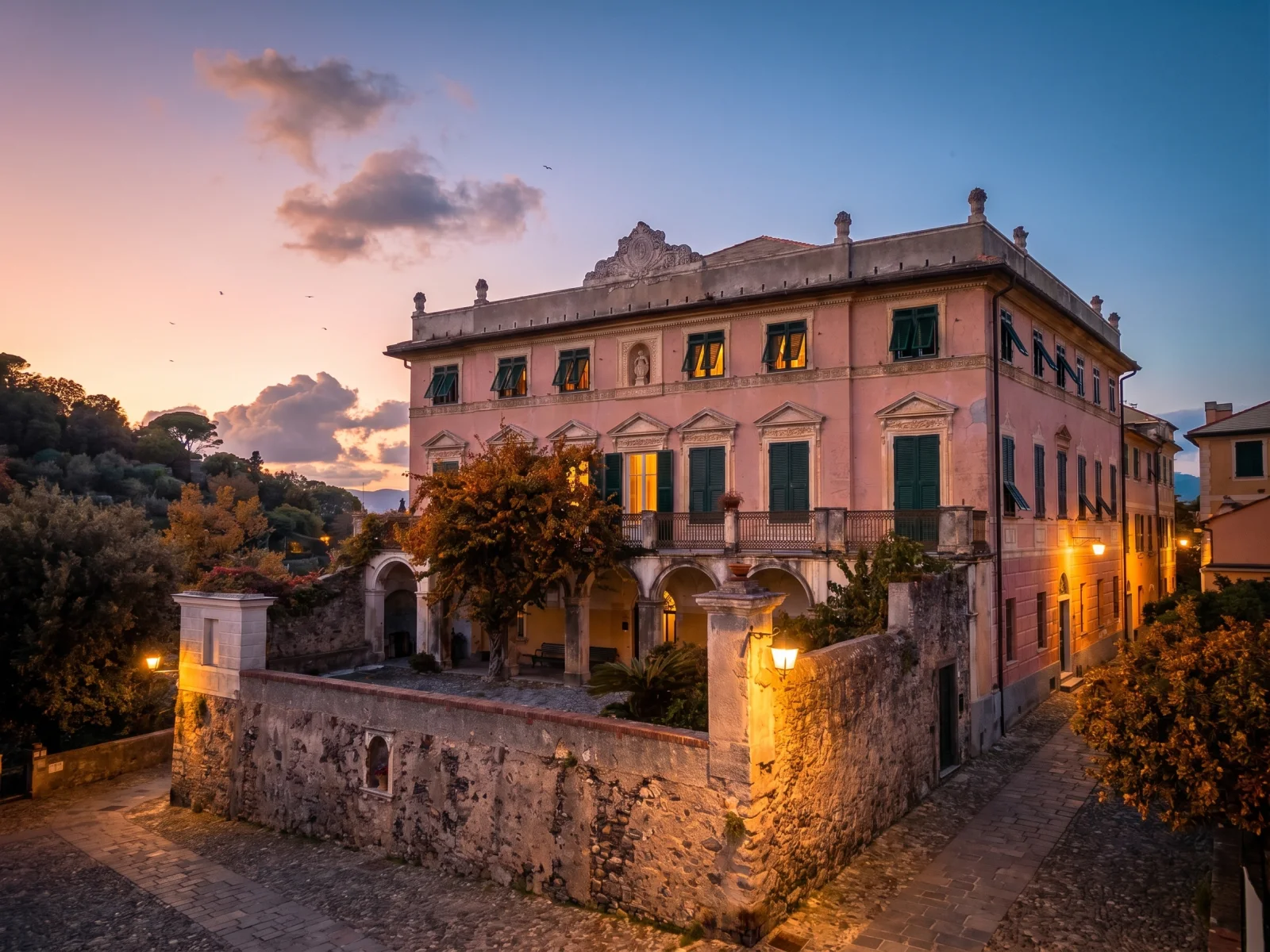
The second reason to come this far is the setting. Further east, in the area known as lo Scoglio, stands Villa Durazzo, built in the seventeenth century by the family of the same name; the place name comes from a rock of ophiolitic breccia resting on crystalline schist, singled out by the geologist Arturo Issel, which ended up naming the whole eastern stretch of the coast. Offshore from Villa Bianchi, instead, lies a shoal thick with fish called San Pietro: the last hold the vanished monastery still has on the map.
Visiting
Villa Bianchi is not a museum: no opening hours or guided tours are on record, and you look at it from the outside. It is the way there that makes the walk worthwhile. The old centre of Cogoleto is essentially a single street, via Rati and via Cristoforo Colombo, with alleys and small squares opening onto the sea: they are called scali, and sailors used them to launch their boats and haul them ashore. Passing through piazza dei Bianchi you come to the Casa Nazionale, the old seat of authority, with the plaque recalling the British navy's cannonball of 11 April 1800, during the battle of Cogoleto; from there you carry on east to Isorella. Cogoleto lies on the western Riviera, about 25 kilometres west of Genoa.
Our editors' tip
We leave the car in the centre and do the last stretch on foot, heading east: it is the alleys and the scali of the old quarter that set up the arrival, not the coast road. Once level with the villa, we suggest turning your back on the building and looking out to sea: in front of you is the San Pietro shoal, thick with fish and well known to local fishermen, the only trace left of the medieval monastery. A few minutes more take you on to lo Scoglio and Villa Durazzo, closing the loop.