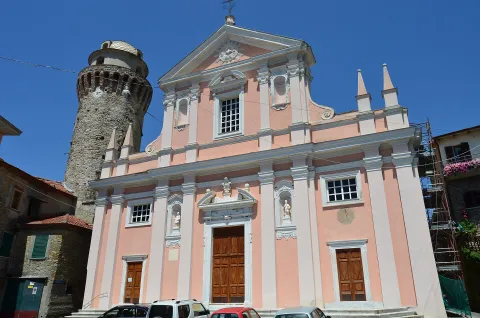
In 1468 the square tower of the castle of Castelnuovo Magra was given its sandstone machicolations, in the years of Florentine rule under the Medici; the second tower, the round one, received brick machicolations later, when the palace had passed to the Republic of Genoa and also served as a powder store. Two details in stone tell the whole story: the complex was built at the end of the thirteenth century for Enrico da Fucecchio, bishop of Luni, as an episcopal residence and the seat of the Luni diocese, and every later owner left behind a recognisable piece of masonry.
What to see
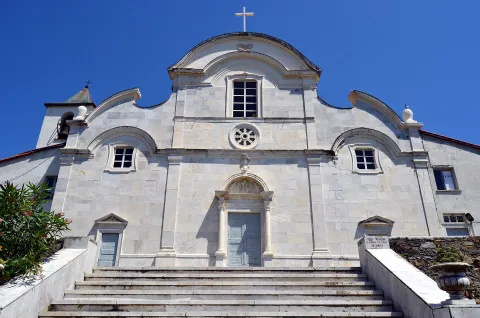
Of what was once a fortified palace looking onto piazza Querciola, the two towers and stretches of the perimeter walls survive. The rest ended up inside the houses of the village: once it fell out of use, the castle was dismantled and its stones reused as building material, the last authorised removal taking place in the nineteenth century to raise the choir of the parish church of Santa Maria Maddalena. Knowing this changes the way you walk through the old centre.
The oldest core is not the episcopal one built for Enrico da Fucecchio: in the area called Borghetto there was already a defensive post, ordered in the early thirteenth century by bishop Gualtiero II, at the same time as the village was founded. The two blocks held reception rooms, quarters for the troops, cellars, a millstone and a chapel. Since June 2015 the turris magna has been open to the public for visits and exhibitions: among the shows staged here have been those of Elliott Erwitt and Steve McCurry, photographers who brought work born a long way from the Magra valley.
Visiting
The castle sits inside the historic centre of Castelnuovo Magra, on the ridge that separates the Magra valley from the sea, and you reach it on foot: piazza Querciola is a few metres from the main street of the village. The tower opens on a seasonal calendar, so it is worth checking the times with the town hall before climbing up. Getting to the top is the main reason to go in: from up there you see the plain of Luni down to the coast and, on the other side, the wall of the Apuan Alps.
Our editors' tip
If you can choose your date, aim for summer: in the square in front of the castle the Peace of Castelnuovo of 1306 is re-enacted, the settlement that ended the war between the bishop of Luni and the Malaspina marquises, with Dante Alighieri acting as proxy for the Malaspina. Tradition places the signing right here, in the bishop's palace. Then walk down to Santa Maria Maddalena and look at the stones of the choir: they are the castle's own, and it is the most direct way to understand how a monument gets used up.