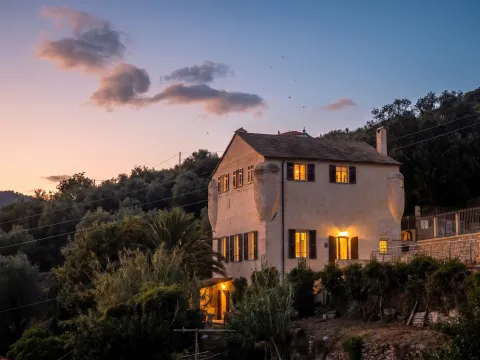
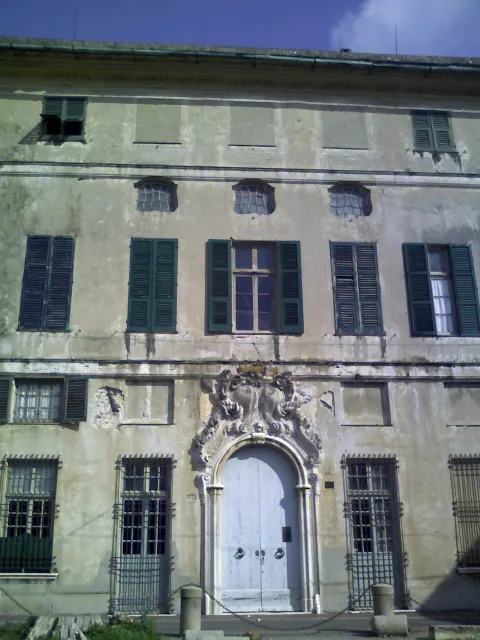
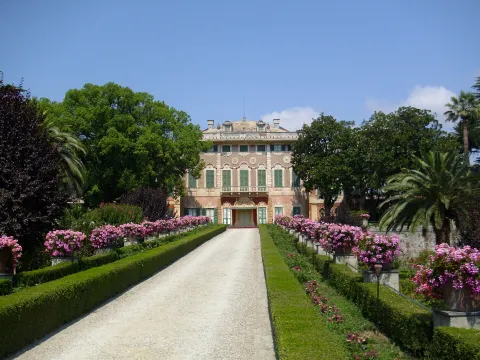
On the Cassisi hill, west of Celle Ligure, a fortified house is now simply a house: private property, lived in, with no signs and no opening hours. Sources list it among the municipality's military architecture alongside the fortified houses of Roglio and Bottini: the three buildings served for control and lookout on the western side of the village, in defence of the territory. They were not siege fortresses but watch points on the hill, and today they are homes.
What to see
Cassisi is one of the zones into which the municipal territory is divided, together with Boschi, Brasi, Costa, Ferrari, Natta, Piani, Pecorile, Sanda and Terrenin. The chapel of Santi Giacomo e Filippo stands in the same area, and the hill around it is still terraced ground: taggiasca olives, fruit trees - apricot, peach, plum, cherry - and vines that yield the nostralino, white and rosé, from mixed grape varieties.
Of the fortified house itself the sources give the name, the hill and the purpose, not a description. To understand what it guarded, look at the rest: in the sixteenth century the fear of pirate raids led to fortifying the village with the support of the Republic of Genoa, with two works known as di Levante and di Ponente recorded in an inventory of 1598; on the ridge stood the Bregalla tower, 261 metres above sea level and circular in plan, later turned over to farming and demolished by German soldiers in 1944; and the two crenellated Cornaro towers remain, La Camilla and the Bacci one.
Visiting
The building is private: no interiors, no ticket, no guided tours. You reach it by climbing towards the hills from the old centre of Celle, the one that grew along the Ghiare torrent and is now largely covered over. Celle Ligure has a station on the Genoa-Ventimiglia line and an exit on the A10 motorway; the SS1 Aurelia crosses the town, and the climbs start from there.
Our editors' tip
Our advice is not to go up for the fortified house but for the slope: put together the chapel of Santi Giacomo e Filippo, the terraces and the view over the coast, and treat the building as one of the marks you meet along the way. We go in the cooler hours, with closed shoes and water, and we stay on the public road: it is someone's home.