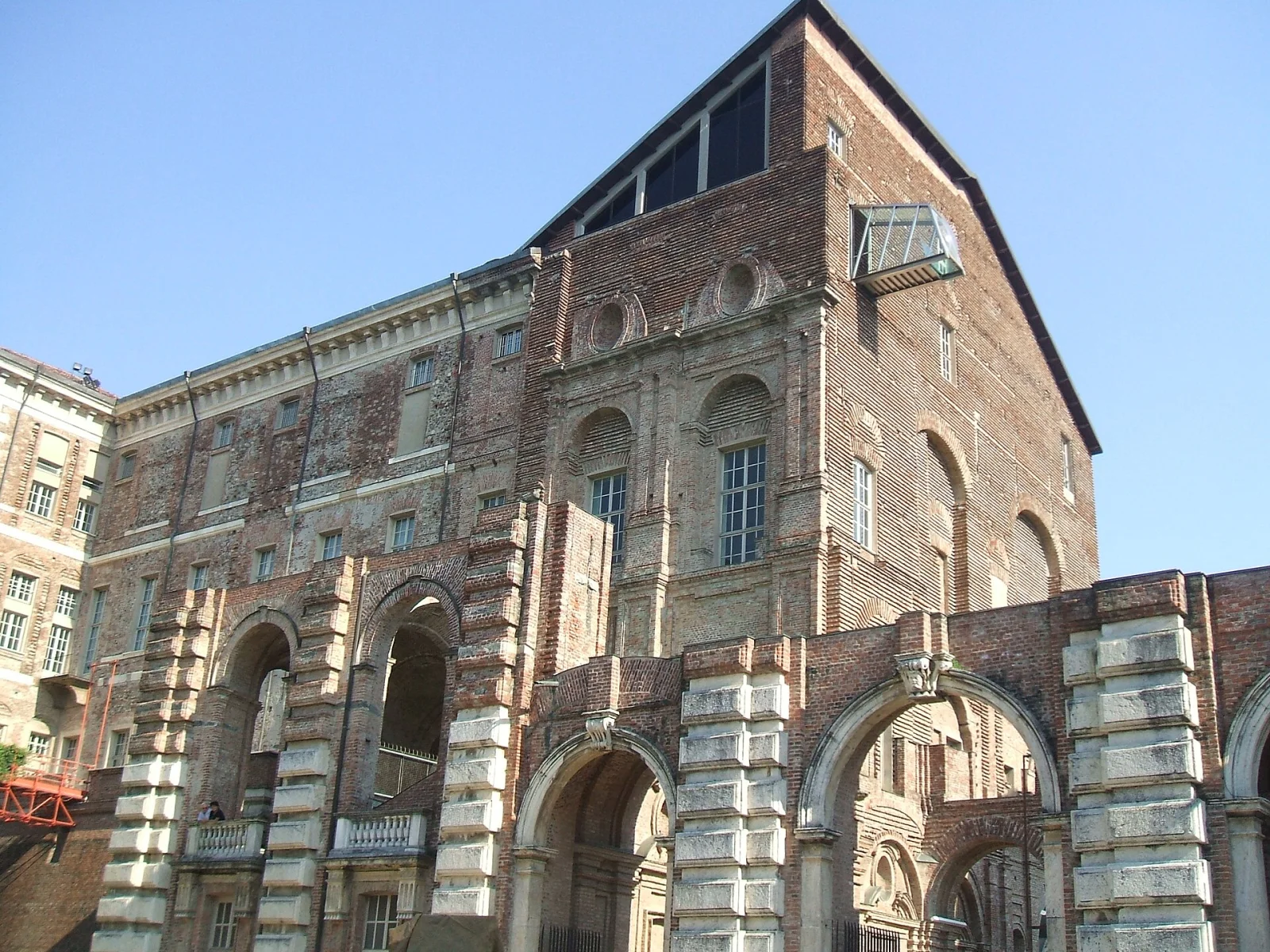
The Museum of Contemporary Art is housed in the castle of Rivoli, one of the residences of the House of Savoy in Piedmont and a UNESCO World Heritage site, on the hill behind the old town. The castle is unfinished: after the damage of the War of the Spanish Succession, the rebuilding ordered by Victor Amadeus II passed in 1716 to Filippo Juvarra, who had a grand project in mind, but only the two eastern wings were completed and the façade was left unfinished. The conversion of the spaces for the museum was designed by the architect Andrea Bruno.
What to see
The museum opened on 18 December 1984 with the exhibition «Ouverture», curated by the then director Rudi Fuchs, with works of conceptual art, minimalism, Land Art, arte povera and the Transavanguardia. The permanent collection took shape from the nineties, thanks to donations from artists and supporters and to purchases funded by the Piedmont Region and the Fondazione CRT. Today it includes, among others, Donald Judd, Bruce Nauman, Richard Long, Alighiero Boetti, Mario and Marisa Merz, Michelangelo Pistoletto, Giulio Paolini, Sandro Chia and Francesco Clemente; there are also two works of 1997 by Maurizio Cattelan, Novecento and Charlie don't surf. The works are arranged in the rooms in dialogue with the castle's historic interiors.
The seventeenth-century Manica Lunga, the lower building standing apart from the castle, houses the specialist library, open to the public since 1999, and the research centre. Since 2002 the museum has also had a section devoted to advertising, created with the acquisition of the RAI Sipra collections: some thirty thousand commercials, posters and print advertisements. The third site is Villa Cerruti, opened in May 2019, with the collection of the businessman Francesco Federico Cerruti: almost three hundred paintings and sculptures from the Middle Ages to the present, rare books and furniture by famous cabinetmakers.
Visiting
The castle is on piazza Mafalda di Savoia in Rivoli, about fifteen kilometres west of Turin. Opening times, tickets and current exhibitions should be checked on the museum's official website.
Our editors' tip
On the first floor look for the large installation by Sol LeWitt: in 1991 he was the first artist to donate a work to the museum, and he chose the room for it himself.