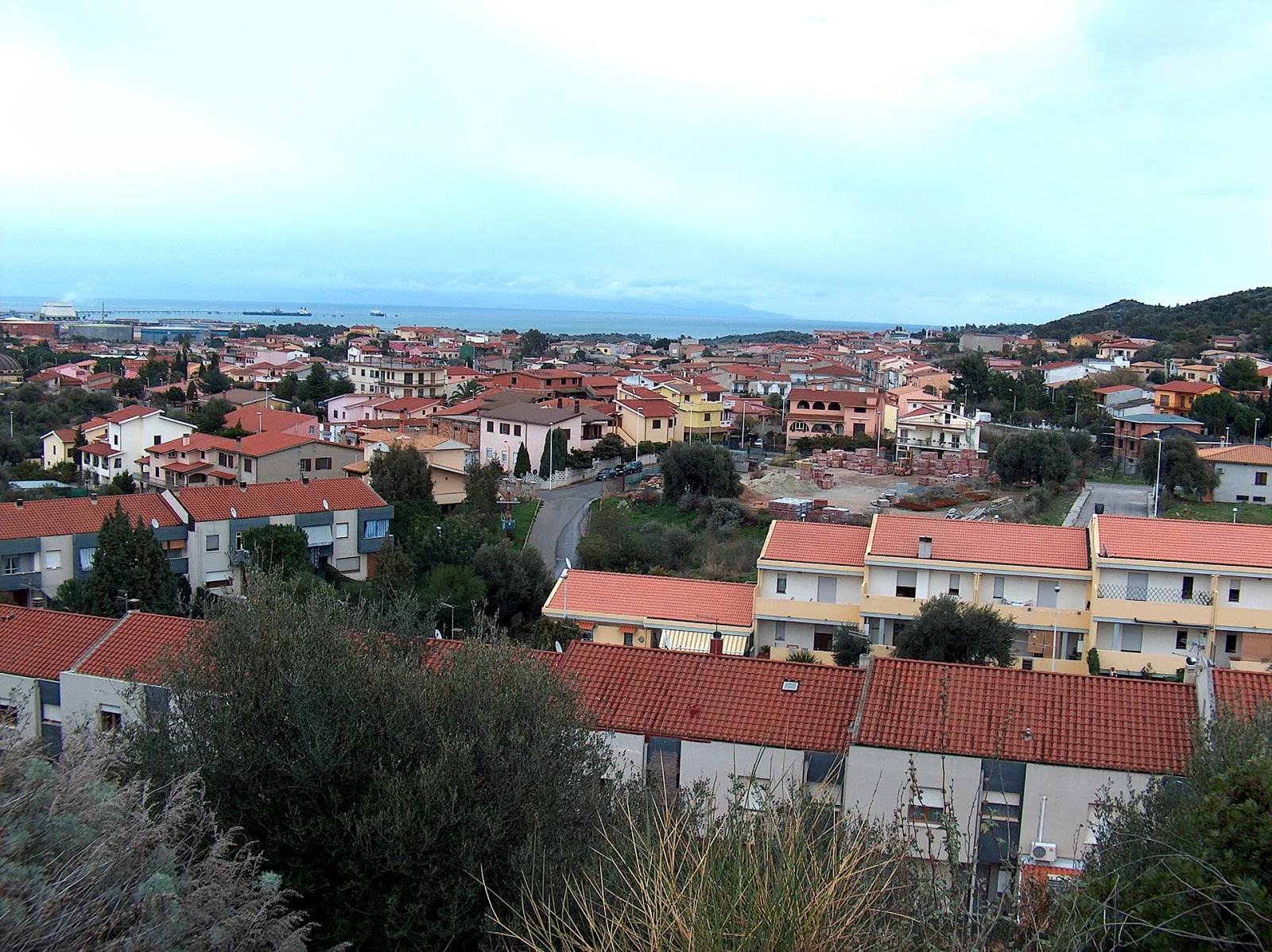
Above the village rises an andesite rock shaped like a truncated cone, with a crucifix planted on top, and it is probably that which gives the place its name: Sarroch is said to come from the Sardinian sa rocca or the Catalan s'arroch, which means precisely rock. The idea that it derives from San Rocco is dismissed with a simple argument: there is not, and never has been, a church or a place here dedicated to that saint. In the Rationes Decimarum of 1341 the village appears as de Saroch. The Barbary raids emptied it, and in the seventeenth century baron Gerolamo Torrellas had it rebuilt further inland, drawing in families of farmers and herders from the Gerrei; the Spanish had already raised three watchtowers on the coast, those of Antigori, of the Devil and of the Ballast.
Villa d'Orri, of the late eighteenth century, is the only royal villa in Sardinia: it belonged to the Manca marquises of Villahermosa and hosted Carlo Felice of Savoy with his wife Maria Cristina of Bourbon and the future duke of Modena. At the roadside in front of the villa stand two monumental pines, all that is left of the garden the marquis laid out: the larger is fifteen metres tall. And it is at Villa d'Orri that on the afternoon of the first of May the cart of Sant'Efisio halts for the night on its way from Cagliari to Nora, symbolically received by the community of Sarroch.
Straight-line distances from the town centre. Tap a point to open its page.
Near Sarroch
The closest destinations covered by our editors, with straight-line distance.


Places to see within 25 km
Outside Sarroch, but an easy day trip away.