The Chiesa del Gesù, or church of the Jesuit College, dominates piazza Ciullo in Alcamo and is the town's second largest church after the mother church. The Jesuits began it in 1684 with their own savings, on land donated by the council, committing in return to public works: six steps at the Porta Stella and moving the fountain-trough from piazza Ciullo. Inaugurated on 29 July 1764, it was finished in 1767, the same year the Jesuits were expelled: construction had taken eighty years, and the people of Alcamo called it the church of the Rappezzo, the patchwork.
What to see
The Baroque façade, with Doric and Ionic pilasters, has five niches with statues of Saint Ignatius of Loyola, Saint Francis Xavier, the Madonna dei Miracoli and the archangels Michael and Raphael; at the sides are two spired bell towers, at the top a marble crown recalling Spanish rule. The three lower statues were damaged by Garibaldi's troops, who entered the town on 17 May 1860 and threw stones and fired at them, and were restored free of charge in 1931 by the Alcamo sculptor Giuseppe Bambina. Since 1989 a clock has stood above the central balcony.
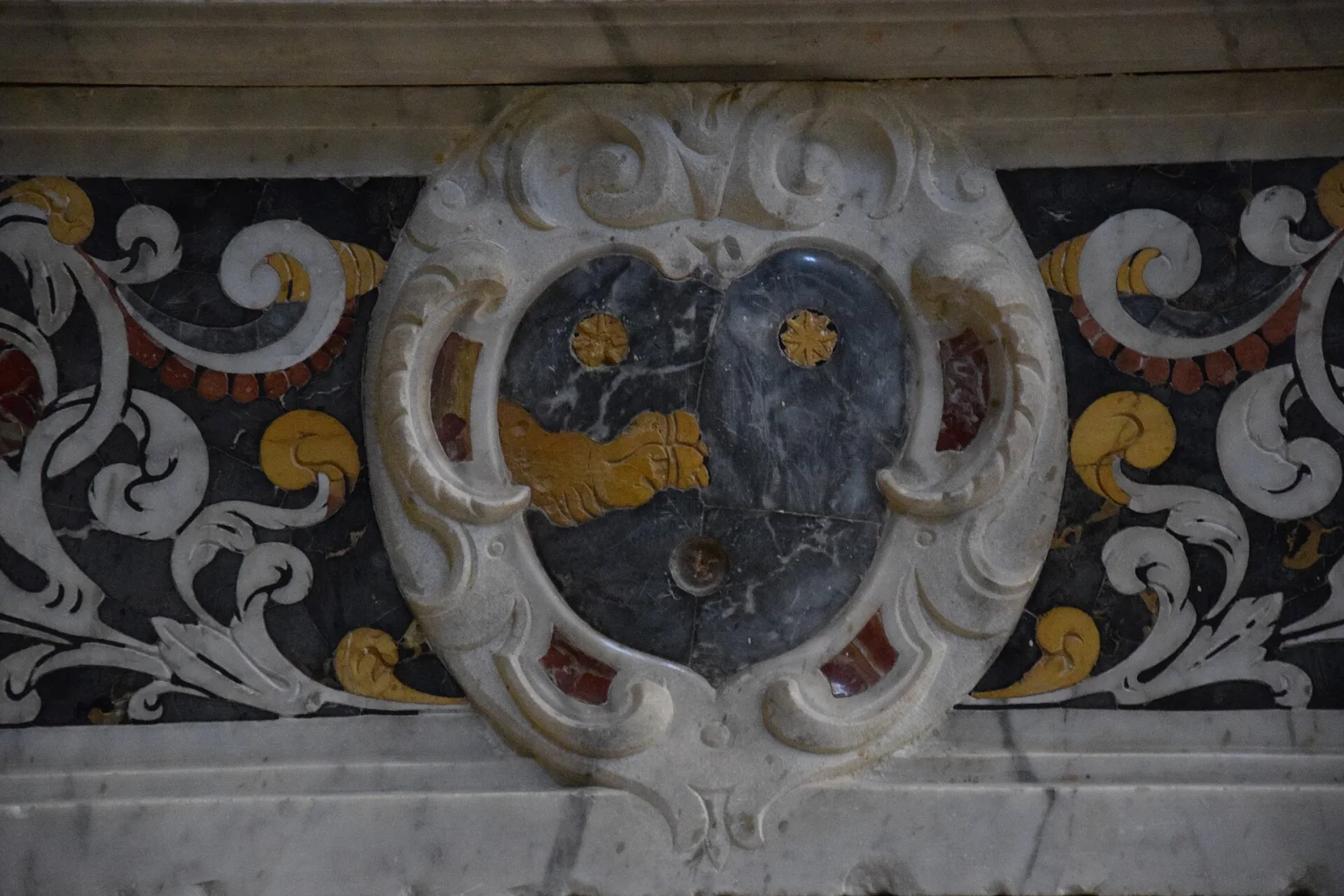
The interior has a single nave with a barrel vault and Rococo stuccoes completed in 1767, perhaps by Giovanni and Francesco Russo, pupils of Lorenzo Curti; the dome has had its present form since 1962. On the high altar is the Circumcision of Jesus by Giuseppe Renda of Alcamo, from 1797. The four chapels are dedicated to Saint Ignatius, to Saint Francis Xavier, with a canvas of Novelli's school, to Saint Aloysius Gonzaga and to Saint Francis Borgia. Near the main entrance stands the Baroque funerary monument, from about 1764, of Father Vincenzo Abbati, who had the Jesuit college built.
Visiting
You enter by the stone steps on piazza Ciullo, which locals call pietra di li Carrubbazzi, or by the side entrance on via Mazzini, where there is an alabaster holy water stoup of 1500. Mass and opening times should be checked with the diocese of Trapani.
Our editors' tip
In the small chapel near the via Mazzini entrance is the Christ tied to the column, the wooden statue that the rope makers, already organised as a congregation in 1748, venerated as their patron.


