
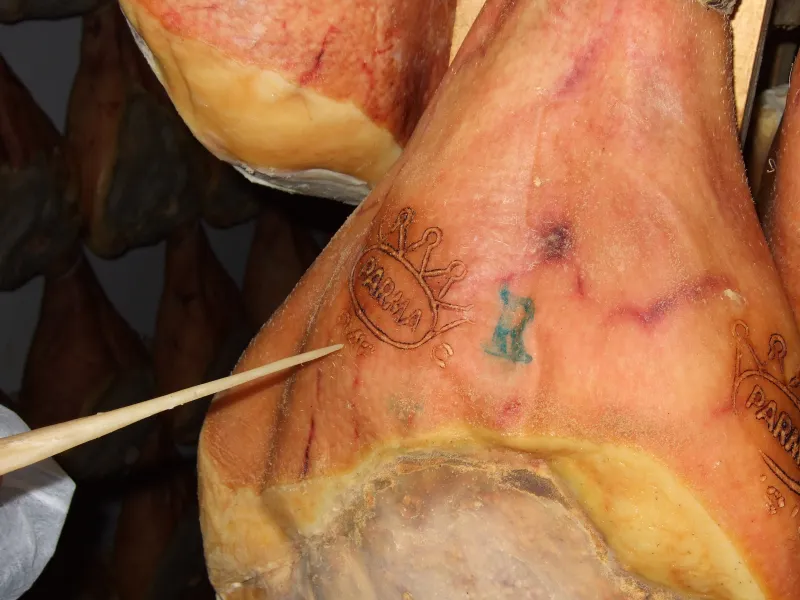
Prosciutto di Parma pork leg and sea salt, aged at least twelve months
Only Italian pork and sea salt, aged for at least twelve months: Prosciutto di Parma has held Protected Designation of Origin status since 1996.
Read more →Compiano is a walled village built entirely around its castle, on a knoll in the Taro valley. The name comes from the Latin cum planum, or — more probably — from the personal name Campilius with the suffix that marked someone's estate. In the early Middle Ages these lands belonged to the monks of Bobbio: in the first half of the ninth century Lothair, king of Italy, confirmed their rights over the court in which Compiano was included.
Then came the Malaspina, the commune of Piacenza and finally the Landi, who made Compiano one of the strongholds of their state: the mint was here, and the village was the bastion closing the way into the upper Taro valley from the Genoese territories. In the fifteenth century Filippo Maria Visconti took it and gave it to the condottiero Niccolò Piccinino; then Charles V raised it to a county and gave it back to the Landi, and in 1626 it passed to the Doria and thence to the Farnese. On the coat of arms, the palm and the laurel stand for the two words of the Landi war cry: virtue and honour.
Only Italian pork and sea salt, aged for at least twelve months: Prosciutto di Parma has held Protected Designation of Origin status since 1996.
Read more →Straight-line distances from the town centre. Tap a point to open its page.
The closest destinations covered by our editors, with straight-line distance.
Outside Compiano, but an easy day trip away.


