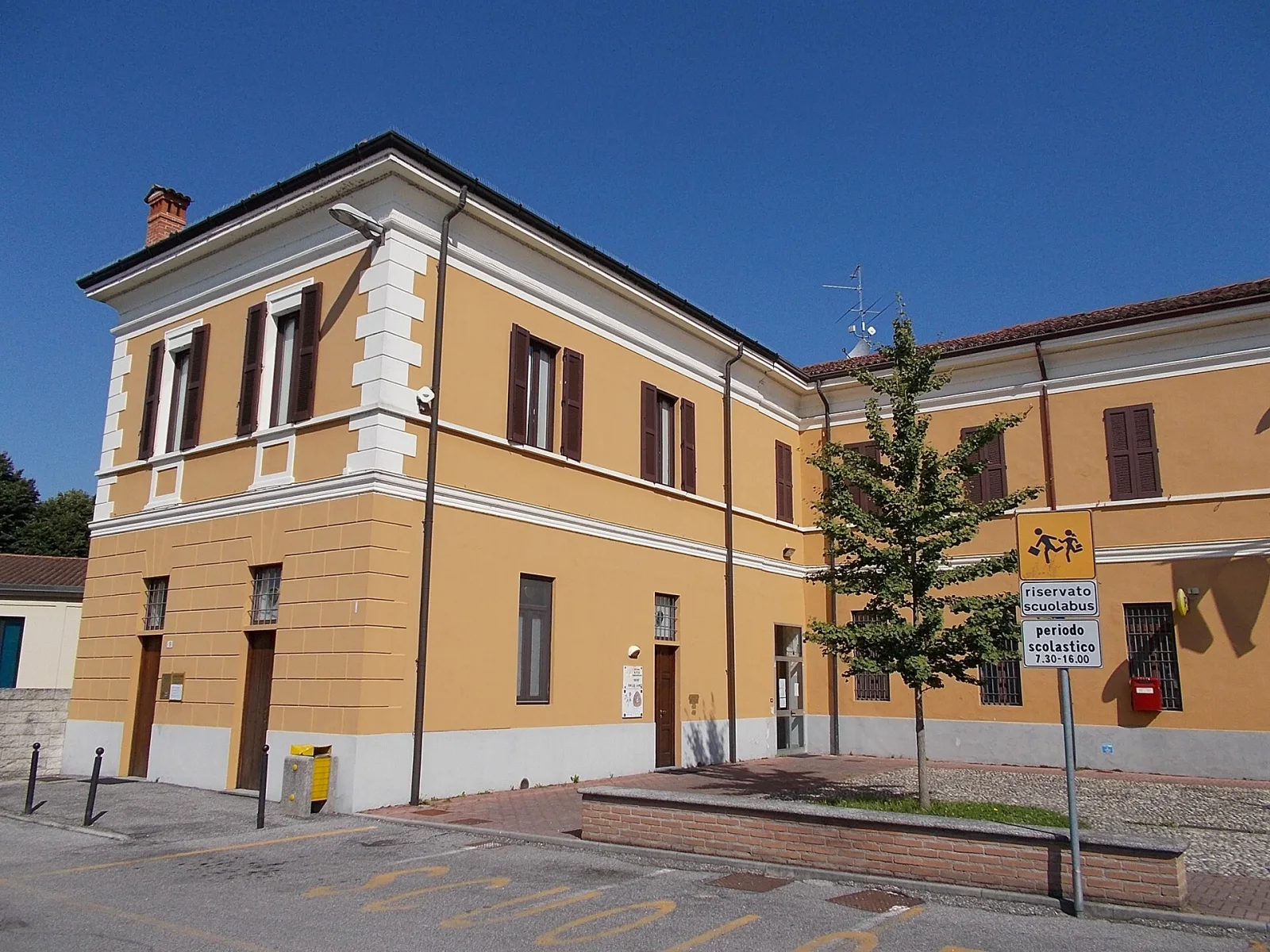
At Casalmorano there is neither a rise in the ground nor a natural watercourse: all the water that runs through here was dug by hand. The Naviglio Civico Vacchelli marks the boundary with Azzanello, there is the Naviglio Pallavicino, and then the irrigation channels that water the fields. The name probably comes from casale Mauranum, the house of the Mauri, a family that owned land here: a document of 995 confirms it, in which Ildefredo son of Mauro of Vico Mariano, his wife Auda and their sons Ambrogio and Mainardo give the bishop of Cremona certain lands, several of them at Casalmorano. A popular explanation prefers «casa dei muron», muron being the dialect word for mulberry trees, of which the area was full because of the silkworms.
The village was destroyed once and fought over many times. At the start of the thirteenth century the Milanese militias at war with Cremona razed it; in the fifteenth Carmagnola came through, who in the service of the Visconti took possessions from Cabrino Fondulo, and who here came off worst when Filippo Maria Visconti and Venice were disputing the Cremona country. Then came the Pallavicino, the Spanish, the Barbò; and in the mid-seventeenth century, during the Thirty Years' War, the French army wrought terrible devastation. Of the Pallavicino castle nothing is left, it vanished in the seventeenth century; what remains is the Donati-Preyer one, which countess Marianna wanted turned into an oratory. In the parish church of Sant'Ambrogio there is a wooden crucifix of 1500, venerated as miraculous.
Straight-line distances from the town centre. Tap a point to open its page.
Near Casalmorano
The closest destinations covered by our editors, with straight-line distance.


Places to see within 25 km
Outside Casalmorano, but an easy day trip away.