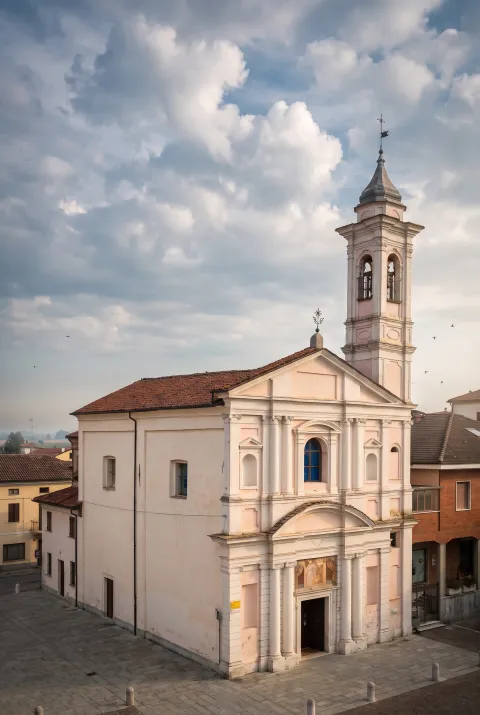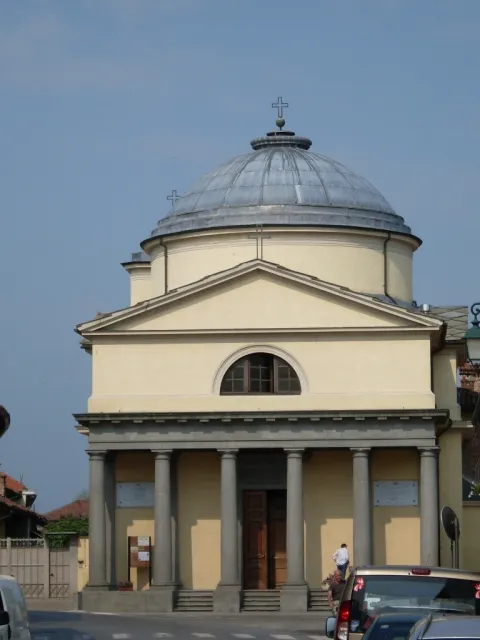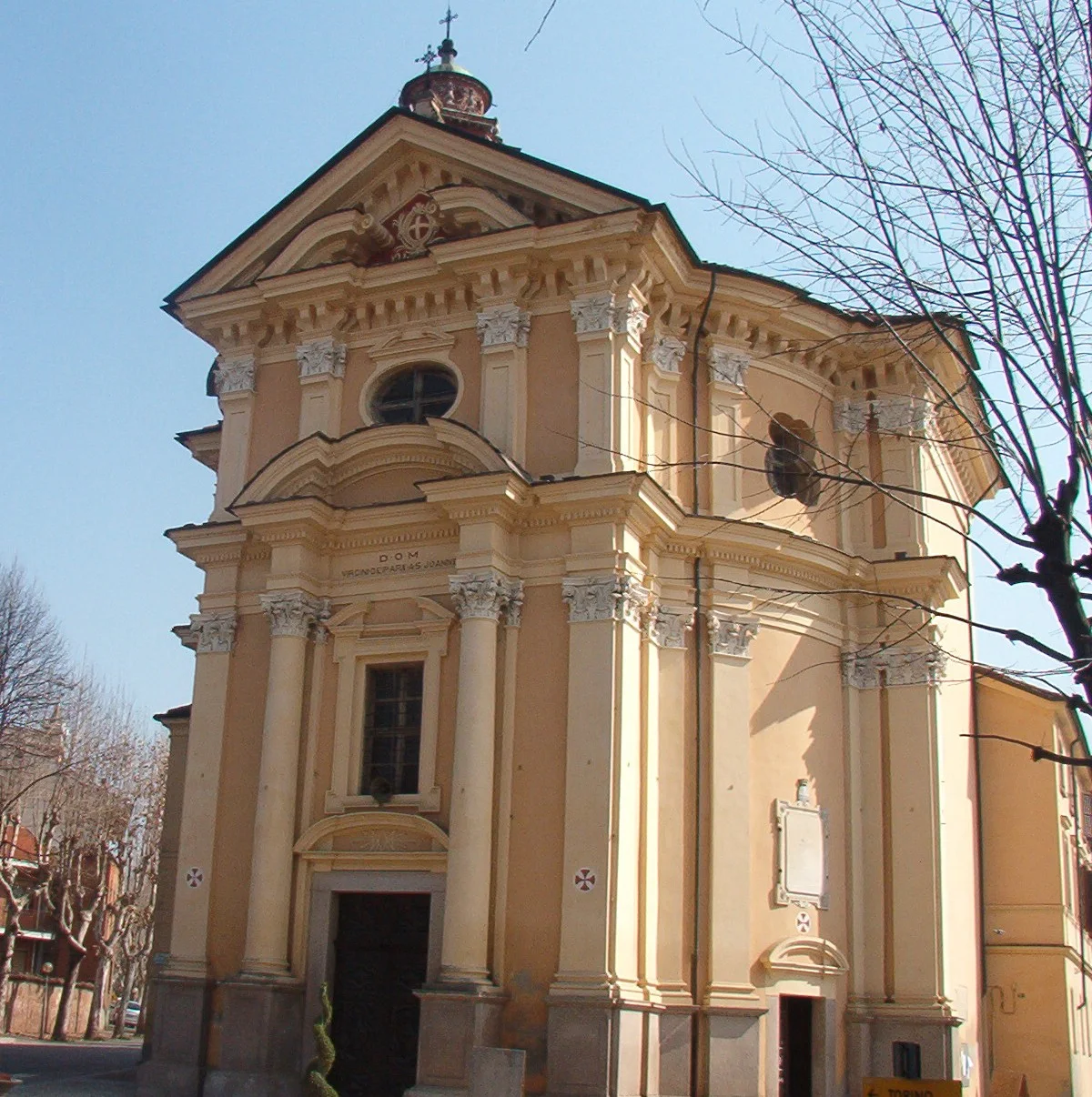
The sanctuary of the Blessed Virgin Mary of San Giovanni stands in the flat part of Sommariva del Bosco, at the tip of a long urban spur running out of the town, which once faced open country towards Racconigi. It was born around a votive pillar: tradition holds that an apparition of Mary took place there, and the sanctuary was built taking in both the pillar and the semicircular apse of an earlier chapel.
What to see
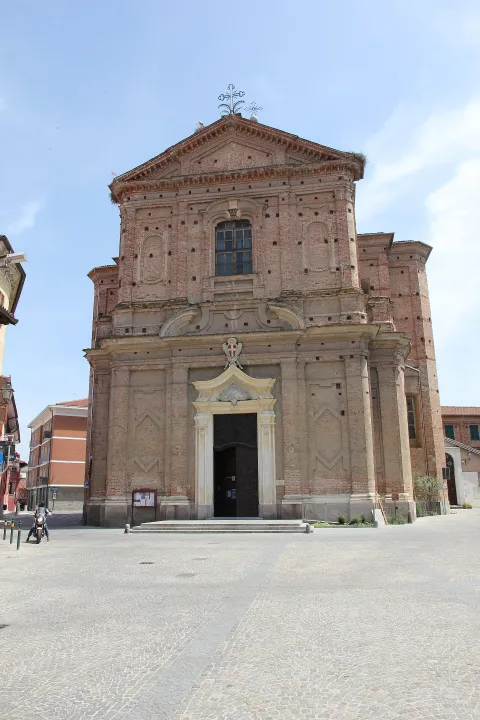
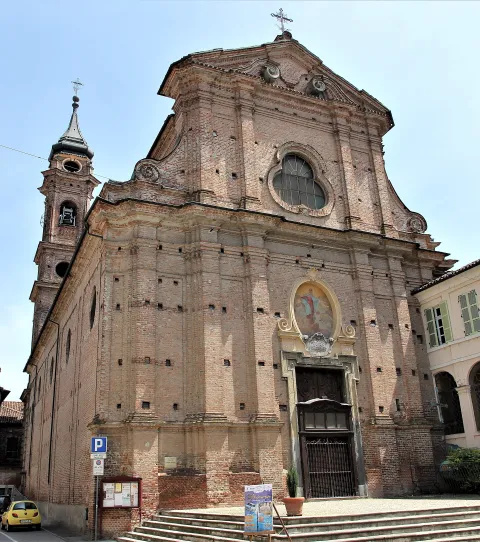
The building is ellipsoidal in plan, and that is the first thing that strikes you: a monumentality lightened by few decorative elements, all pushed upwards. Inside, the vault rests on great round columns set on square bases, and the whole brings together marbles, stuccoes, gold-leaf decoration, sculpture and frescoes. The side walls are marked off by chapels dedicated to the archangel Michael and to Saint Anthony Abbot, with two paintings by Operti; in a niche stands the statue of the Madonna enthroned. The design is by Michelangelo Garove, among the best-known architects of his day, and the front with columns, capitals and applied pilasters repeats outside the manner of the interior.
Visiting
The apse holds the fresco for which all this was built: a Madonna of the last quarter of the fourteenth century, seated, holding the Child laid in her lap, her right hand stretched over him and her left raising a prayer book. According to legend, that book carries the names of every inhabitant of Sommariva. The beauty of the painting is now partly compromised by a later addition: two angels holding a crown over the Madonna's head, put there probably to honour her, but weighing on the simplicity of the original.
Our editors' tip
The story that holds it all together is that of a blind man. On a Sunday in May 1685, around four in the afternoon, he stopped to pray before the image and, so the legend says, recovered his sight. It was 6 May, and that has been the feast of Sommariva ever since. After the miracle the community resolved to build the sanctuary, and it was an undertaking that cost great sacrifice, above all in hauling the materials and finding the money. As you go in, it is worth remembering that this large and rich building was paid for by a country town, and that at the centre of it all is a fresco on a wall that was already there.