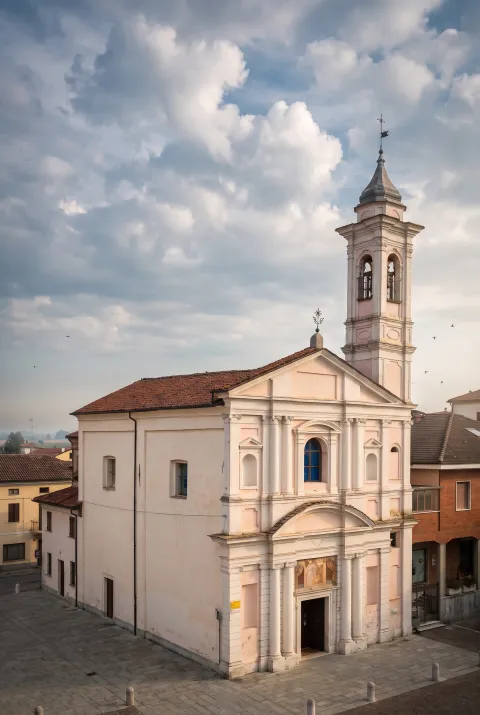
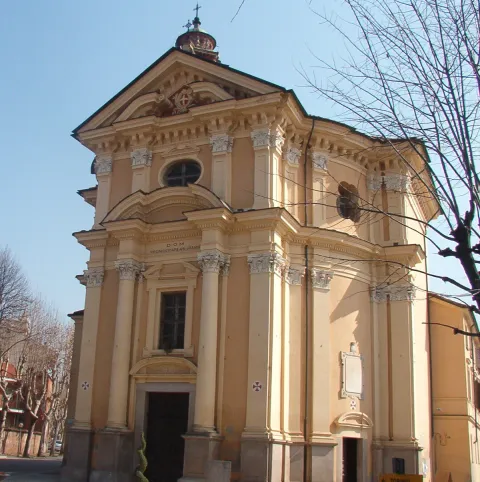
The protected zone of the Woods and Rocche of the Roero, which everyone calls the Roero park, covers about 1800 hectares across the municipalities of Baldissero d'Alba, Bra, Pocapaglia, Sanfrè, Sommariva del Bosco and Sommariva Perno. It is an alternation of cliffs and steep valleys, between 247 and 436 metres above sea level, protected by the Piedmont Region since 1990 and made a site of regional interest by the law of 2003.
What to see
The Rocche are the reason for the park. They are faces cut into the ground, and their origin is a precise geological fact: the diversion of the river Tanaro set off a progressive erosion that carved the deep valleys you see today. That work laid bare the grey-blue marls of the Tortonian and the gypsum banks of the Miocene; in the southern Roero the Pliocene marls form the impermeable floor of the valleys. The landscape alternates crops and woods, and on the valley floors there are wetlands, ponds, marshes and fishponds, many of them made from small basins dug for irrigation.
Visiting
The woods change with the wetness of the soil. On the damp valley floors grow alders, elms and beeches; where it is drier, pedunculate oak, hornbeam, small-leaved lime, wild cherry and ash. On the heights sessile oak prevails, and in the driest spots Scots pine, Turkey oak and downy oak appear, along with wild service tree, cornelian cherry and wayfaring tree, species botanists class as submediterranean. In the oak woods and at the edges of the vineyards open heaths of bracken and purple moor-grass, where the marsh gladiolus sometimes grows, rare and protected.
Our editors' tip
Look at a cliff face close up and you have before you the section of a sea bed: the grey-blue marls and the gypsum that come to the surface were laid down when this was sea, and they have come back to the light only because a river changed course. That is why the Roero has this profile and the Langhe, on the other side of the Tanaro, have another. Spring is the best time, when the heaths flower and you can hope for the marsh gladiolus; but remember it is a protected species, so you look and nothing more.