What to see
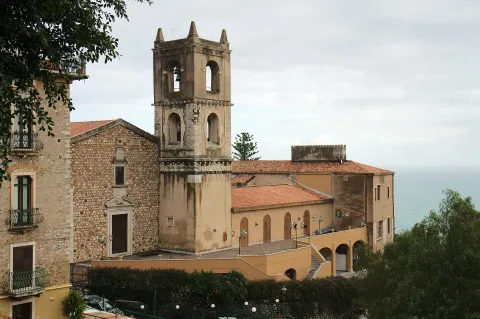
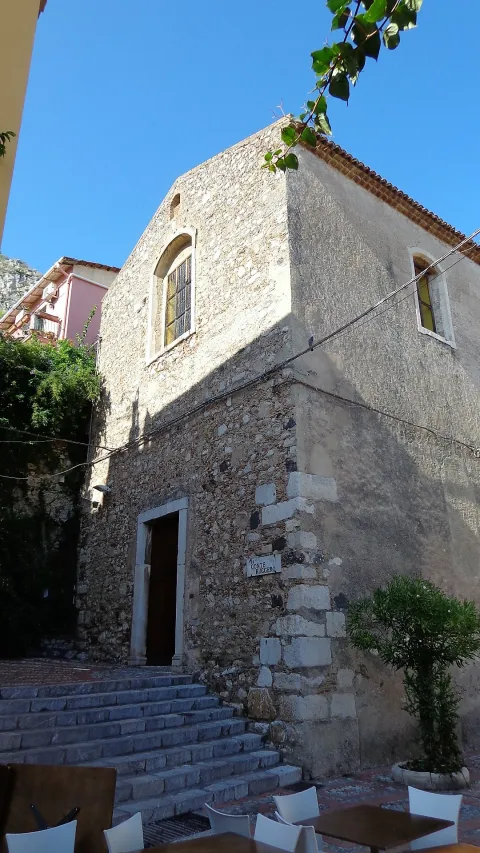
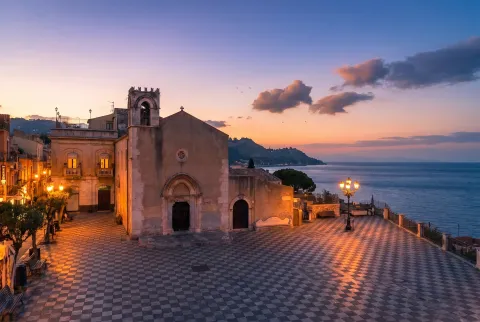
The exterior combines Sicilian Romanesque-Gothic architecture with later Renaissance and Baroque interventions. Its facade features three rose windows crafted from Syracuse stone and a main Baroque portal, remodeled in 1636 by city jurors and framed by Corinthian columns and 15th-century lancet windows. On the western facade facing Palazzo dei Giurati, a late 15th-century portal carved from black lava stone depicts grapevine motifs and a relief of Christ Pantocrator flanked by Saints Peter and Paul, while the eastern portal exhibits early 16th-century Sicilian Gothic moldings. Inside, the Latin-cross plan includes three naves supported by six columns of pink Taormina marble capped with leaf- and fish-scale motifs, under a wooden ceiling featuring Gothic-adapted Arabic carvings. The counter-facade holds a 13th-century marble holy water font and two 19th-century mausoleums. Along the right aisle, key works include a 1457 Visitation panel by Antonino Giuffrè, a 1504 polyptych by Antonello de Saliba featuring the Virgin, the Deposition, and a five-panel Last Supper predella, and the Madonna non manufatta image with a 1693 inscription thanking the Virgin for protection during the Val di Noto earthquake. The left aisle houses a 16th-century altarpiece of the Madonna and Child by Alfonso Franco and a 16th-century marble statue of Saint Agatha by Martino Montanini, relocated here after bombing damaged her original church in July 1943.
Visiting
Visitors access the basilica through the main portal on Piazza Duomo or via the side entrance along the right aisle. Between 1945 and 1948, Neapolitan architect Armando Dillon led restoration efforts that cleared Baroque plasterwork to reveal the medieval apse arches and restored the terrace roofs over the side aisles.
Our editors' tip
In the right aisle, examine the intricate wooden frame and predella of Antonello de Saliba's 1504 polyptych depicting the Last Supper, along with the silver filigree ornamenting the panel of the Madonna non manufatta.