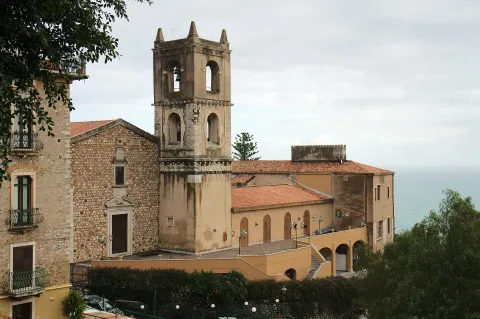
Standing on central Corso Umberto next to Palazzo Corvaja, the 17th-century Church of Santa Caterina d'Alessandria was constructed directly over the remains of an ancient Roman Odeon, which had itself replaced the southern colonnade of a Greek temple dedicated to Aphrodite. Before this Baroque structure was built, the local Capuchin friars occupied an earlier church dedicated to Saint Catherine outside the town walls near Porta Messina. That original site was sold in 1610 under Archbishop Pedro Ruiz de Valdivielso to finance the new construction. Following a 40-year period of closure and decay, the building underwent restoration and reopened on 25 November 1977.
What to see
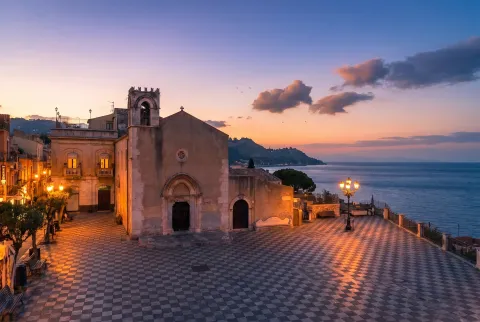
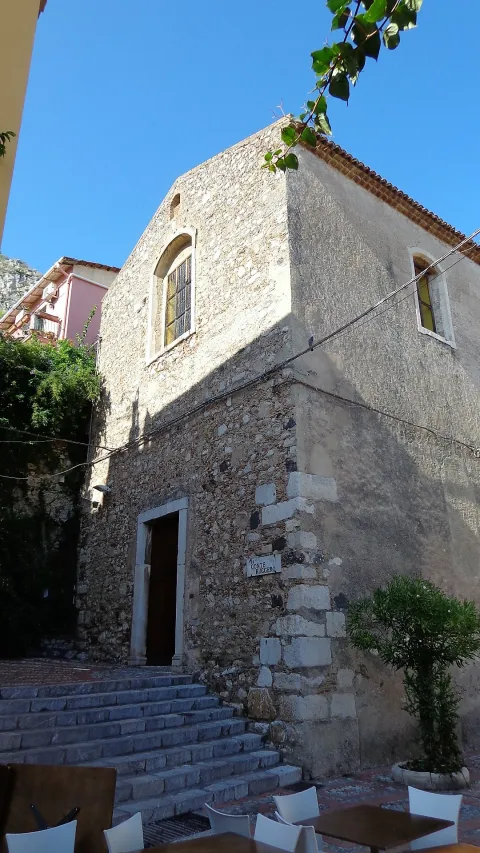
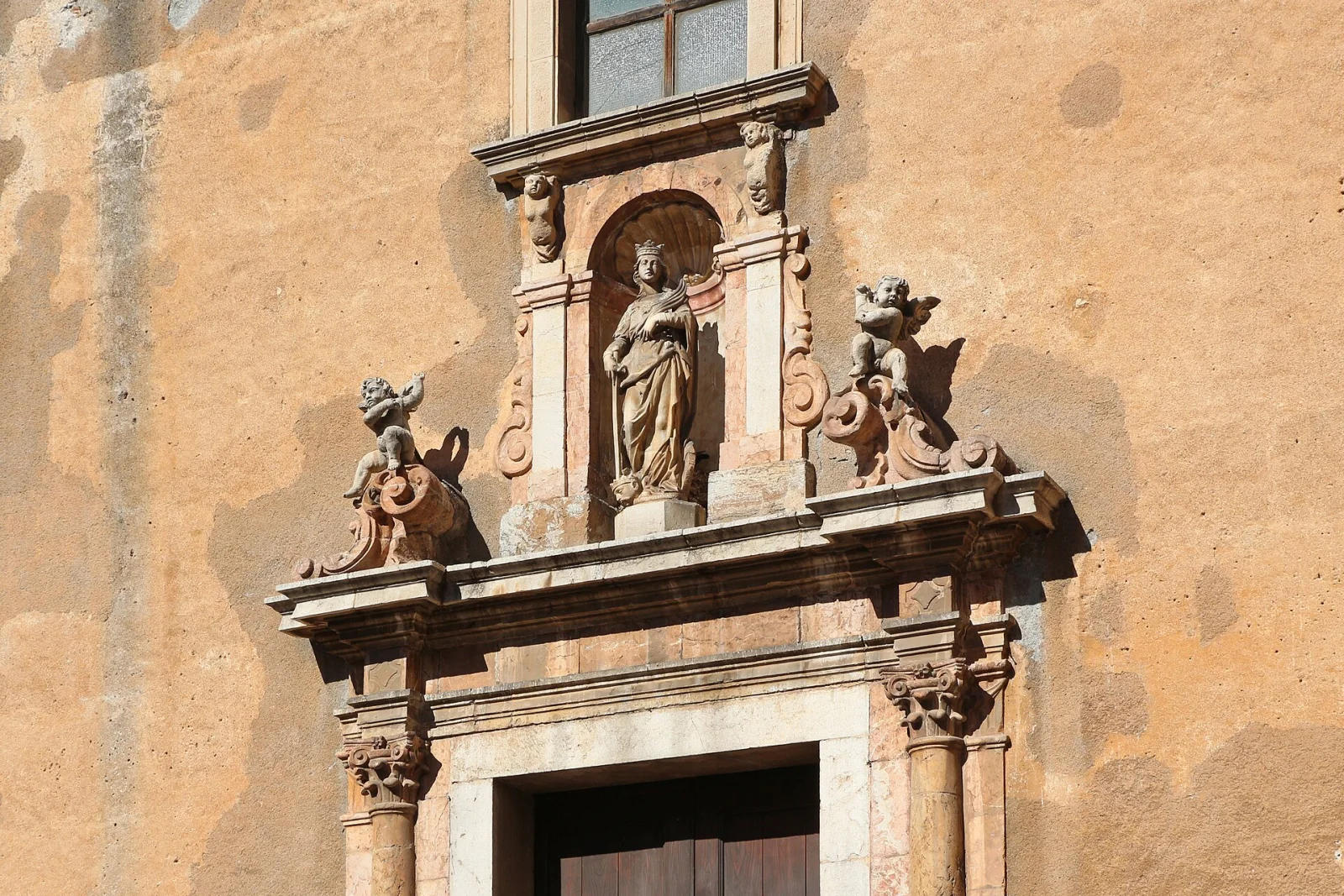
The facade is accessed via five steps and features a central portal carved from local pink Taormina marble. Ionic columns set on tall plinths support Corinthian capitals and an architrave adorned with twin scroll volutes bearing seated putti. Above, a broken Baroque pediment contains a shell-backed niche with a statue of Saint Catherine carved in 1705 by Paolo Greco, depicting the saint holding a sword and palm branch while standing over the tyrant Maximinus Daia. A small bell tower breaks the symmetry on the left side of the facade.
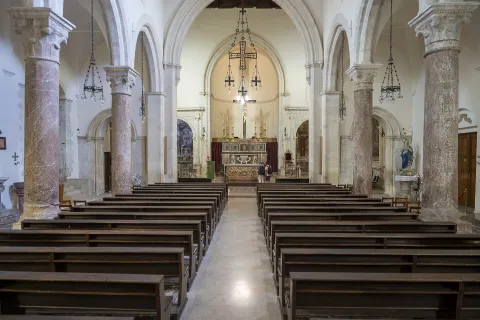
Inside, the Baroque sanctuary exposes fragments of earlier Greek and Roman architecture near the entrance, alongside a plaque on the counter-façade. Notable works include two 15th-century paintings depicting the Madonna and Saints (one showing Carmelite saints) and a 15th-century statue of Saint Catherine. The high altar displays a marble altar table framed by twisted stucco columns adorned with acanthus leaves. Its central niche houses a 16th-century painting of the Martyrdom of Saint Catherine by Jacopo Vignerio, set within a gilded wooden portal topped by a lunette depicting God the Father surrounded by angels.
Visiting
Part of the Archdiocese of Messina-Lipari-Santa Lucia del Mela and the parish of San Nicola di Bari, the church offers visitors a clear look at the ancient stone foundations exposed near the doorway, illustrating how the 17th-century structure was built directly atop Classical ruins.
Our editors' tip
Take time to examine the entrance portal crafted from local pink marble and the 1705 statue of Saint Catherine positioned in the upper niche, where the carved shell backing reflects traditional pilgrimage symbolism.