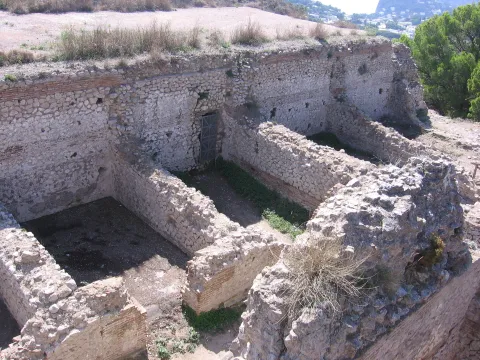
Axel Munthe was a Swedish doctor who, at twenty, climbing up to Anacapri for the first time, saw the ruins of a chapel at the top of the Phoenician steps and decided that one day he would build his house there. It took him years: he bought the land, raised the walls with local farmers and filled it with the antiquities that came to light as they dug, because up there had stood a villa of the emperor Tiberius. Then he wrote a book about it all, The Story of San Michele, which in 1929 became one of the great publishing successes of the century.
What to see
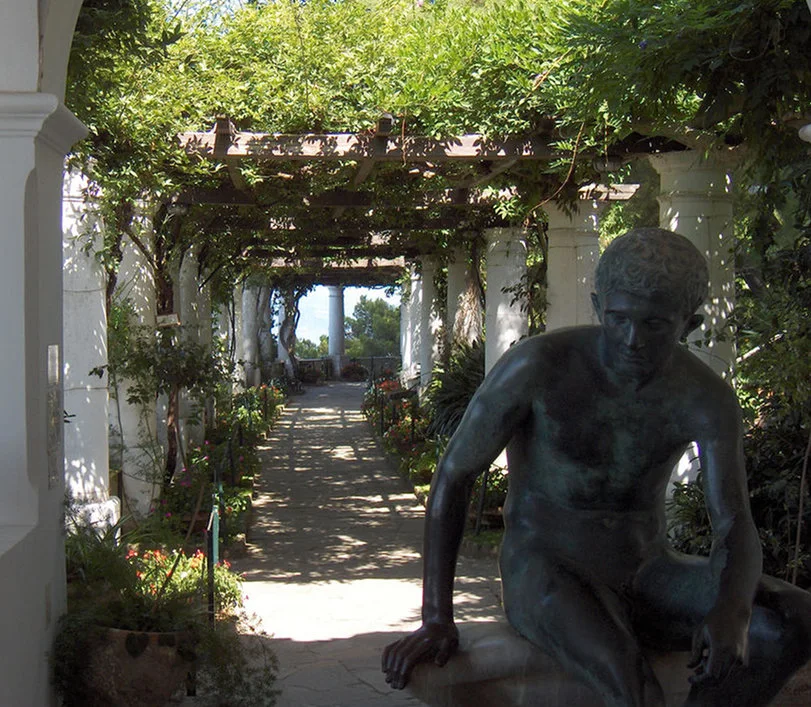
The house is white, low and full of light, with rooms opening into one another and colonnades framing the sea; inside are ancient marbles, mosaics, Roman heads and the objects Munthe collected, arranged as furnishing rather than as a museum. The garden is the best part: pergolas, cypresses, terraces on the edge of the drop and the loggia from which you see Capri, the harbour and the bay.
On the terrace parapet stands an Egyptian sphinx of red granite, very old, placed so that it faces the sea and turns its back on whoever arrives: nobody can see its face. Munthe also bought Monte Barbarossa, the mountain above the villa, to stop the netting of migratory birds there: it has been a sanctuary ever since, and it may be the most useful thing he did.
Visiting
The villa is in Anacapri, five minutes on foot from the stop of the bus that climbs from Capri; ticketed, open daily with seasonal hours. An hour. In summer there are sunset concerts in the garden. Those who walk up the Phoenician steps come out right there, after several hundred steps.
Our editors' tip
Go to the end of the loggia, to the sphinx, and stand beside it looking where it looks: from that point you see the whole island below and the open sea in front, and it is why the house was built exactly here. Tradition says to lay your left hand on the sphinx's back and make a wish; everyone does it, and nobody can say since when.