Eboli

Province: Salerno · Region: Campania · Population: 38,219 · Postal code: 84025

The book that made Eboli famous in the world is not about Eboli. Carlo Levi's «Christ Stopped at Eboli» is set in Basilicata: Eboli is only the point where the road ended, the name of the last stop. Here everyone knows the title and gladly turns it round, because this is not the end of anything but the balcony over the plain of the Sele. The name, besides, says the opposite: perhaps from the Greek eu bolos, «good clod», or eu polis, «good city», which through the Latin Eburum became Evoli and then Eboli. When they arrived, the Greeks called it Ephyra katà Kampanian — and Ephyra is the old name of Corinth.

Virgil names it twice: he gives it a mythical founder, Oebalus son of the king of Capri, and calls it «an ancient land, mighty in arms and in the richness of its soil». The Romans made it a municipium, its people full Roman citizens but governed by their own laws; Alaric destroyed it in 410. From here came father Matteo Ripa, the missionary who founded in Naples the Collegio dei Cinesi, Europe's first institute of oriental studies. On 4 August 1943 Allied bombing levelled seven houses out of ten. Today the old town climbs towards the Colonna castle, the archaeological museum tells the Sele valley, and around it are buffaloes and greenhouses: the farming capital of the Salerno country, with Paestum ten minutes away.

🎉 Festivals and feasts in Eboli 1

Patron saint festival In 244 days

Saints Vitus and Berniero, patrons of the town made famous by Carlo Levi

📅 Every year, on 15 June

Eboli celebrates Saints Vitus and Berniero on 15 June; the second saint is honoured with an 18th-century chapel holding his oldest known panel depiction, while the first gives his name to the ancient church of San Vito al Sele, dating from the 10th century.
🍝 The flavours of Eboli

Everything to eat in Eboli →

🌿 Local produce IGP

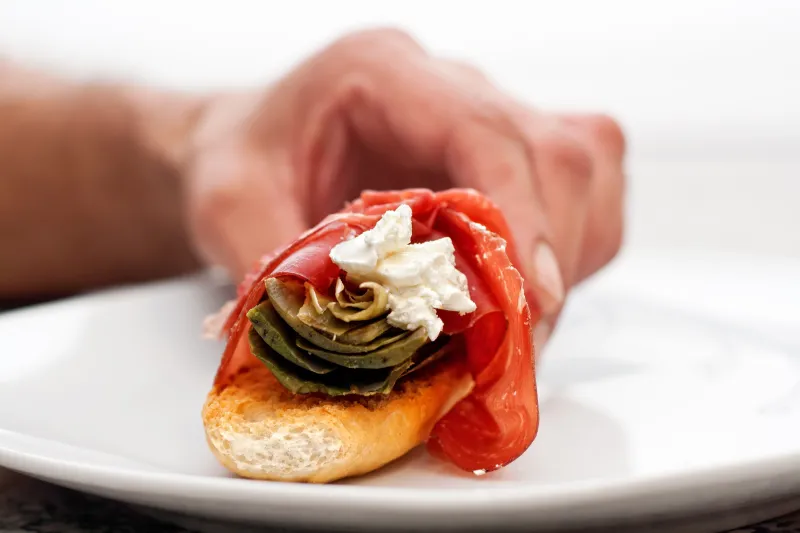
Carciofo di Paestum large round artichoke, grown in the Sele plain

A large, round artichoke head, the Romanesco type: Carciofo di Paestum, grown in the Sele plain since the 1920s, has held IGP status since 2004.

Read more →
What's around

Straight-line distances from the town centre. Tap a point to open its page.