A single 33 metre arch crosses the Nervia torrent and holds the two halves of Dolceacqua together: the Terra, the old core at the foot of Monte Rebuffao, under the Doria castle, and the Borgo, the newer quarter that grew on the opposite bank along the road climbing the valley. The bridge was built for exactly that, in the fifteenth century, when the Borgo began to take shape and the two banks needed a permanent link.
What to see
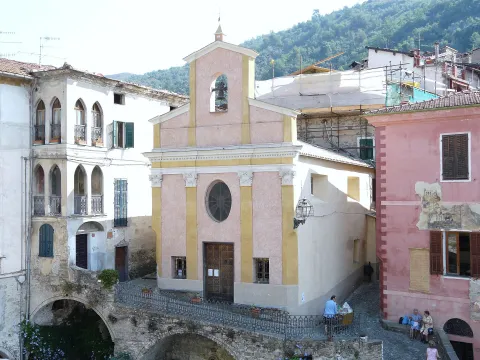
Locals call it the Romanesque bridge, although the structure belongs to the fifteenth century. The arch is single and spans the whole width of the stream: thirty-three metres of clear span, an outsized figure for a village crossing. On the left-hand side, at the approach, stands the chapel of San Filippo Neri, of 1714.
In early 1884 Claude Monet, travelling along the Riviera di Ponente, stopped at Dolceacqua and made it the subject of several paintings: the castle and this bridge are the two motifs he kept returning to. Since then the arch has been the image by which the village is known beyond its own valley.
Visiting
You cross on foot, at any hour and for nothing: it is the ordinary way between the Borgo and the Terra, not a detour laid on for visitors. From the parapet on the Borgo side the castle sits directly above the roofs of the old core, and the whole layout of the village becomes readable at a glance: the crag with the fortress, the torrent in between, the valley road heading up towards the high Val Nervia.
Our editors' tip
We cross it and keep going: on the far side it is worth climbing into the Terra along the concentric rings of lanes that were added around the rock after the Doria arrived, in the thirteenth century, up to the castle itself. On the way back the bridge looks different, seen from above and whole, the way the painter saw it.