The small painting carried in procession from Montenero on Whit Monday is not the original image: that one, by tradition a Byzantine icon known as the Madonna di San Luca, was buried in a secret place to save it from Lombard raids, found again later and finally lost during the 15th century. In its place came a panel showing the Assumption of Mary among the apostles, restored in 1947 and still shouldered along the paths today. The first written records of the sanctuary go back to documents of 1335, though local memory traces a first place of worship to the 8th century, built by the people of Riomaggiore after the Marian vision said to have come in 790 to a young woman, Maria del Paladino.
What to see
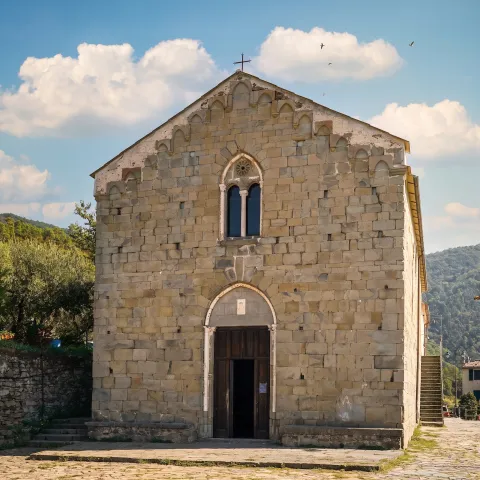
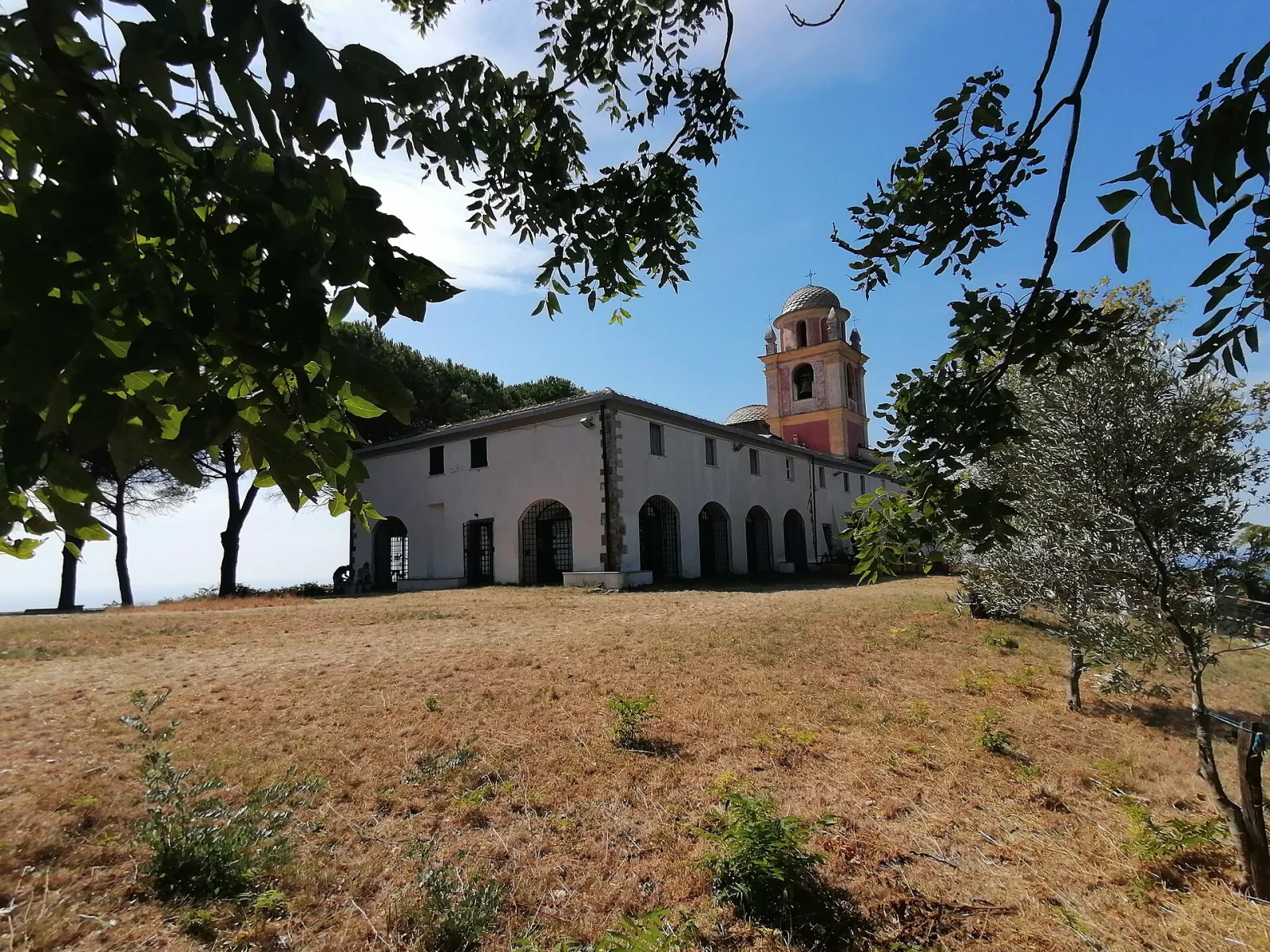
The building you see today is the result of two big campaigns, in 1740 and again in 1847, which enlarged and reorganised the old fabric into the present three-nave layout. Inside, the fresco dates to the 18th century and is the work of the painter Battaglia, from Castelnuovo Magra.
On the gallery stands the organ built in 1899 by the Agati-Tronci firm of Pistoia, an instrument you would hardly expect at this altitude. Montenero is one of the stops on the route of the Cinque Terre sanctuaries, along with Nostra Signora della Salute at Volastra, Nostra Signora delle Grazie and Nostra Signora di Reggio above Vernazza, and Nostra Signora di Soviore above Monterosso al Mare: five upland shrines, one for each village on the coast.
Visiting
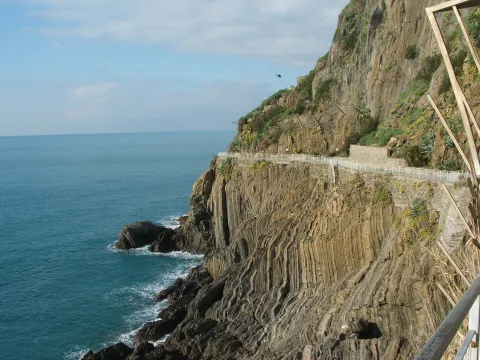
The sanctuary sits at 340 metres above sea level and can be reached only on foot: the mule track starts from provincial road 370 and climbs at a steady gradient. Closed shoes and water are needed, since there are no reliable fountains along the way and the shade comes and goes. The return can be closed by dropping down towards Riomaggiore, with the village and the sea in front of you for most of the descent.
Our editors' tip
We suggest climbing in the early morning, when the slope is still in shadow and the sea below is empty. If you happen to be here on Whit Monday, stay for the procession: it is the day the little painting leaves the sanctuary and the people of Riomaggiore walk up the same mule track.