The houses of the hamlet grew inside the castle: the blocks that once held garrisons and storerooms were enlarged over time and turned into private homes, so Bastia Sottana is at once a fortification and a piece of village. The stronghold was built around 1450 by Filippo Doria on a low hill above the old centre of Sassello, after the earlier castle of Bastia Soprana and the original core of the village had been destroyed. The new settlement grew at the foot of the walls and never moved back: the shape Sassello still has today comes from that relocation.
What to see
Underground chambers survive, along with long stretches of perimeter wall layered between the 15th and the 17th century and consolidated by restoration work carried out between 2008 and 2010. The masonry is not all of one age: the later repairs are easy to read, because in 1612 the Republic of Genoa became the owner of Sassello and the fortress ended up in the middle of the clashes with Savoy in 1672 and again in 1747, years when the village was occupied and burned.
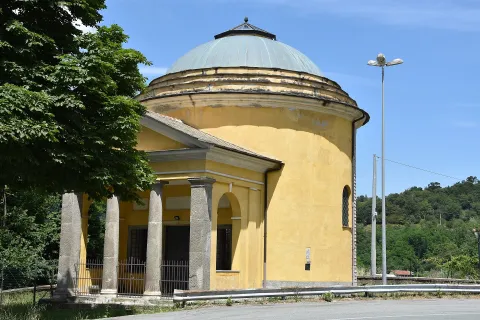
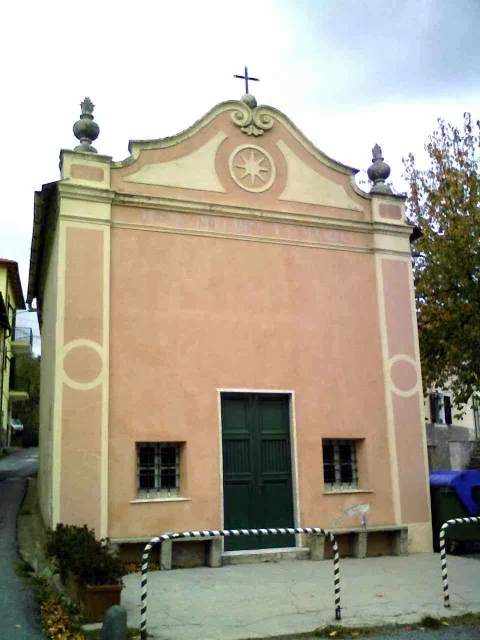
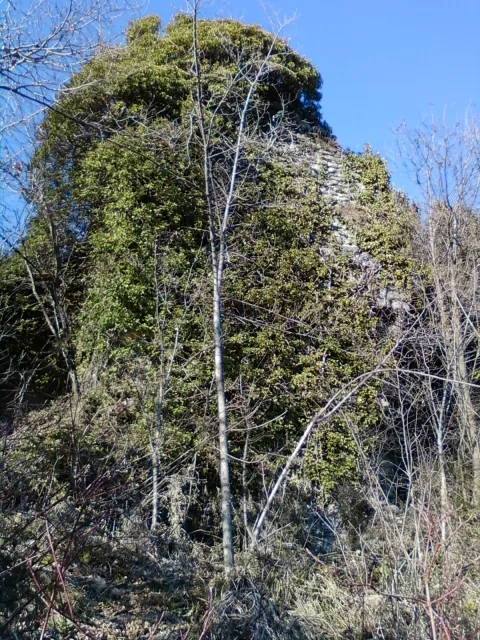
The best preserved element is the marquis' chapel, now dedicated to Sant'Antonio abate: once enclosed within the castle walls, reduced and altered over the centuries, it holds a painting of the Madonna with saints by Giovanni Battista Carlone. On the other side of the village, on a rise to the east, stand the remains of the tower known as “Saracena”, all that is left of Bastia Soprana, the castle that Branca Doria — the man Dante placed in the Inferno — had built and that Genoa razed to the ground.
Visiting
It is a walk of a few minutes uphill from the old centre of Sassello: the hamlet sits right against the village, on the hill above it. Bear in mind that most of the buildings are lived in, so you move through lanes and private passages with some discretion; what you see are walls, arches and small openings between the houses, not rooms open to the public. The chapel is unlocked for services.
Our editors' tip
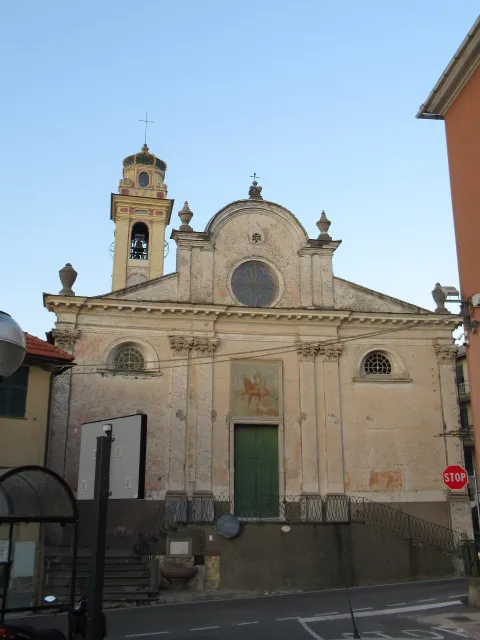
Go in late afternoon, when the low light picks out the courses of stone and you can tell at a glance where the fifteenth-century wall ends and the seventeenth-century patching begins. Then walk down towards the village past the medieval bridge near the church of San Rocco: from below you understand how much the hill dominates the houses, which is exactly why the Doria chose it.