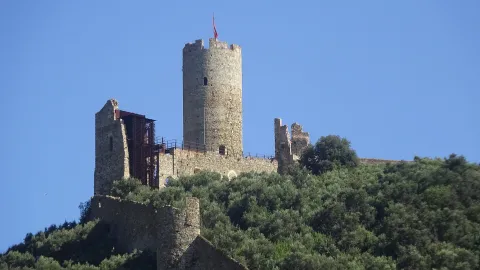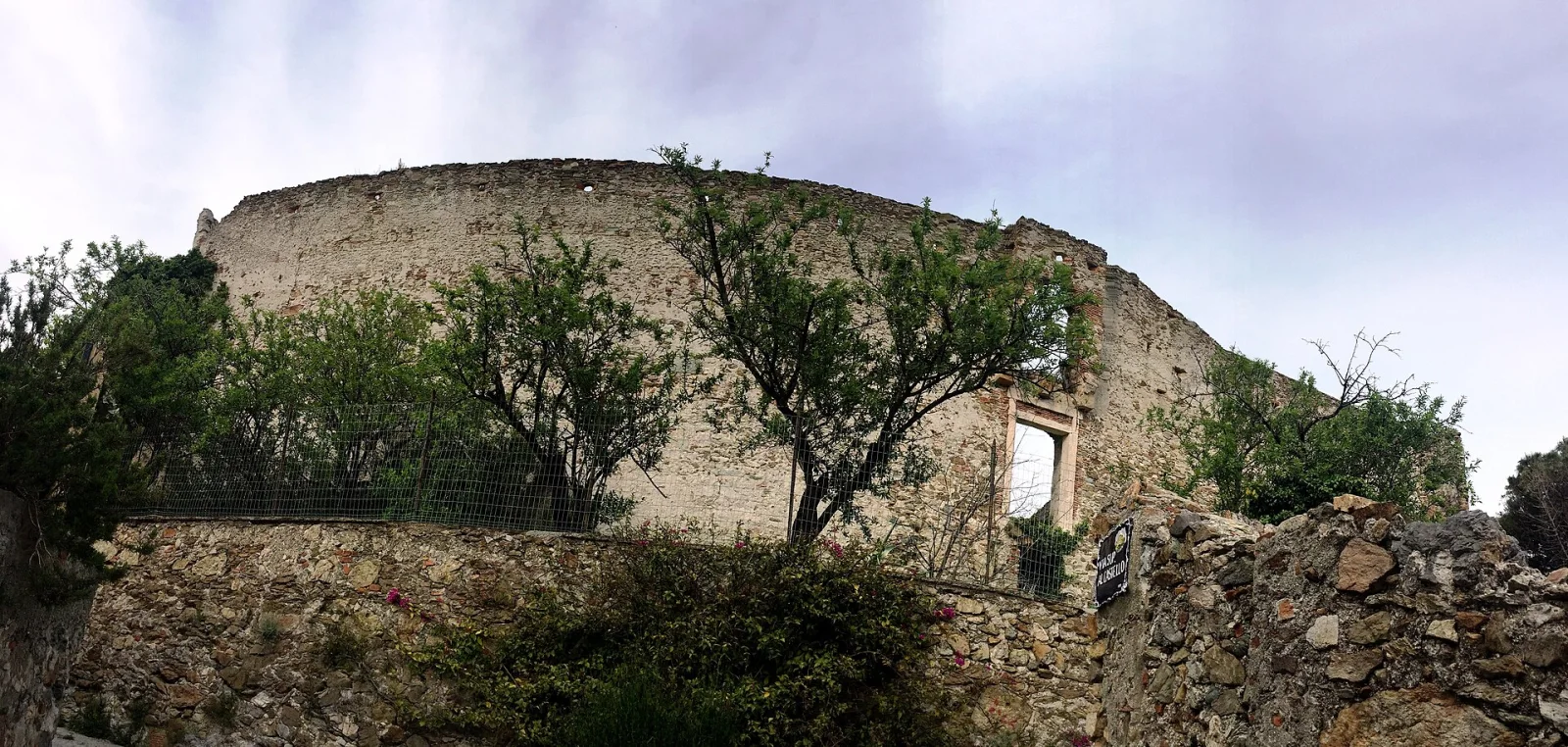
In 1227 the men of Noli and Segno, staunch allies of Genoa, climbed the hill and levelled the castle. It was the second demolition in a few decades: the stronghold had already been pulled down at the start of the thirteenth century and rebuilt in 1218. Spotorno castle, on the rise north of the town on the Riviera delle Palme, never had much luck, and what survives today speaks mostly of the powers that fought over it.
What to see
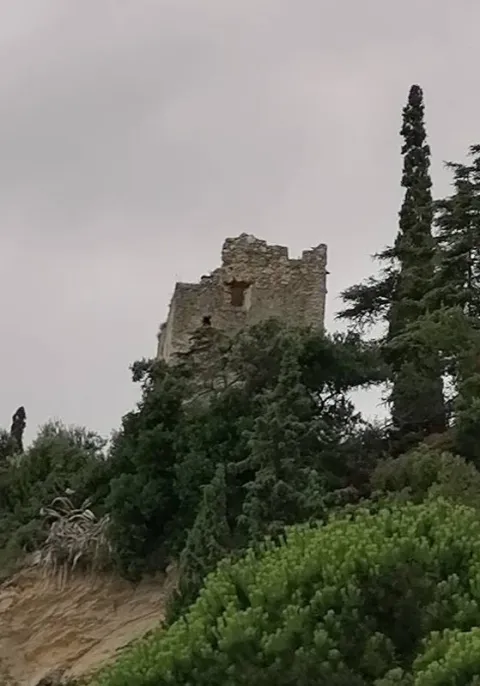
What you get is a ruin, and it is better to know that before climbing: the castle has been derelict for a long time and no one ever put it back together. What remains is the quadrangular plan — the shape the fortress took between the fourteenth and the sixteenth century, in the last of its rebuilds — and above all the position, a half-raised hill commanding the town and the strip of coast below. That was exactly the reason it existed.
The chronology reads better in the archives than in the stones. In 1180 the fortress already appears among the feudal properties of the diocese of Savona, which means it was built before or during the rule of the Savona bishops. In 1333 it passed to the municipality of Savona; in the second half of the sixteenth century it went to the De Loterio family, who held it until the outbreak of the First World War. Since 1933 the site has carried a protection order from the architectural heritage authority — a safeguard that arrived when there was a ruin to save rather than a building.
Visiting
You climb from the village with your back to the sea: the hill is the one closing the built-up area to the north, and the ascent is short but steady, worth doing in proper shoes. Nothing here is set up for visitors — no ticket office, no opening hours, no custodian — and the remains should be looked at from outside, because the masonry is unstable and unsafe in places. Half an hour is enough, and it is mostly about the view: from up there you understand why four different powers wanted that hill over four hundred years.
Our editors' tip
Go in the cold months and late in the afternoon: with the scrub low the quadrangular perimeter actually reads, and raking light lifts the walls off the slope. And climb before walking the old centre of Spotorno, not after — the castle makes more sense once you have seen what it was meant to protect, the seafront village and the coastal passage.