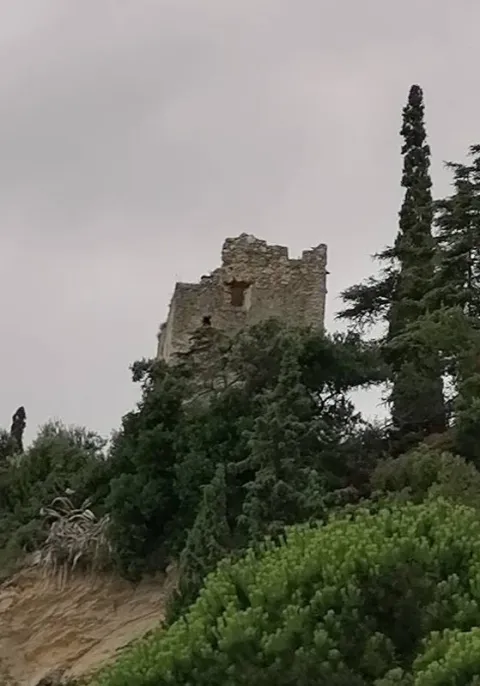
Monks from the sea founded it. The parish church of Sant'Ermete was built in the Middle Ages by the Benedictines of the monastery of Sant'Eugenio, on the island of Bergeggi, on which the monastic cell here had depended since the 10th century. That is not a detail for specialists alone: it tells you this valley mattered. Between the 7th and the 9th century the bishop of the diocese of Savona had temporarily moved his see into the territory of Vado, and of the network of island abbeys and mainland cells that followed, one of the surviving buildings stands right here.
What to see
The church has a two-nave structure: less usual than the single Baroque nave that dominates parish churches around Savona, and the clearest surviving mark of a medieval origin that later centuries kept updating.
Around the church the village holds older memories still. At Sant'Ermete, as at nearby San Genesio, evidence of Roman rule has been unearthed; between the village and the hamlet of Ponte dell'Isola lie the remains of the house attributed to the Roman emperor Pertinax. A short way off stand the Sant'Ermete lime kilns, whose activity is documented from the late Middle Ages onwards: much of the lime that built up Vado and Savona came out of them.
Visiting
Sant'Ermete sits inland from Vado Ligure, along the valley of the Segno stream that the municipality follows for its whole length, minutes from the coast and the industrial port but in another register altogether: low houses, vegetable plots, terraces of olive and vine. You reach it by driving up the valley from the town. This is a working parish church, so opening times follow the services; the village itself is best walked without a plan.
Our editors' tip
Do not stop at the church square. Going down towards Ponte dell'Isola you come to the old Vigliola oil mill, water-powered, beside the Segno: church, kilns and mill together explain the working life of this valley far better than any of them does alone. And if you want to see the Roman finds that came out of this ground, they are in the Museo Civico di Villa Groppallo, down in Vado.