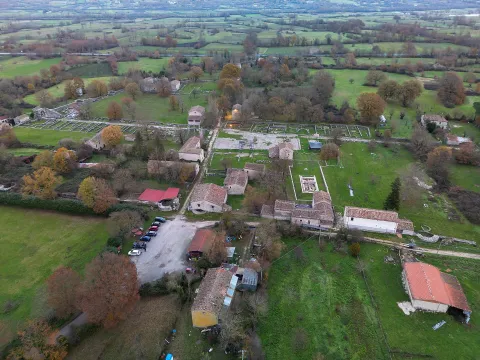
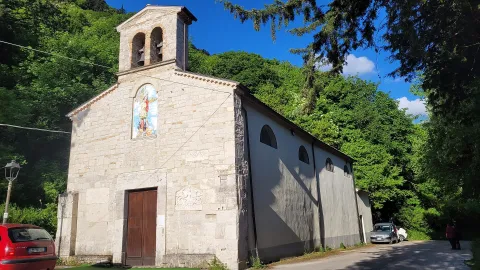
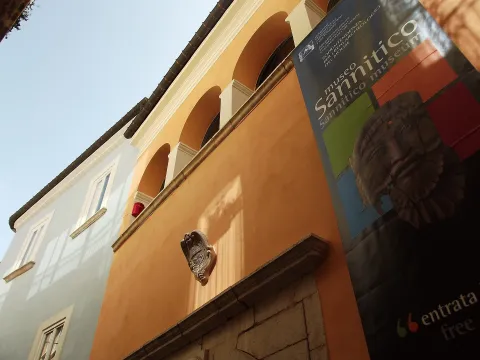
The Museo della città e del territorio occupies a group of eighteenth-century farmhouses built over the ruins of the Roman theatre of Sepino: the building that holds the finds is itself part of the stratigraphy it describes. It stands in the hamlet of Altilia, in the province of Campobasso, inside the archaeological area of Saepinum.
The approach is thematic before it is chronological. It moves from working life and games to vessels for food and for lighting, then to architecture and painting, and finally to the funerary rites tied to the necropolis. Most of the material is Samnite and comes from the excavations, though later periods are represented too: this is a museum of daily life rather than of great names.
What to see
There are four rooms. The first covers prehistory and looks beyond the town itself to the whole Tammaro valley, with material from Cercemaggiore, Santa Croce del Sannio and San Giuliano del Sannio. The second gathers finds from the lower part of the village, where a settlement once stood, spanning the fourth to the first century BC. The third is the imperial age, when Saepinum was, in Livy's words, “fortissima atque potentissima”. The fourth closes with vessels and ceramics of the imperial period and later, including pieces that came from Roman Africa: a detail that shows how little isolated this valley was.
Our editors' tip
See the museum after the excavations, not before: lamps, pots and everyday objects carry a different weight once you have walked among the ruins they came from. The site has been under state management since December 2014 and is now run by the regional museums directorate of Molise.