What to see
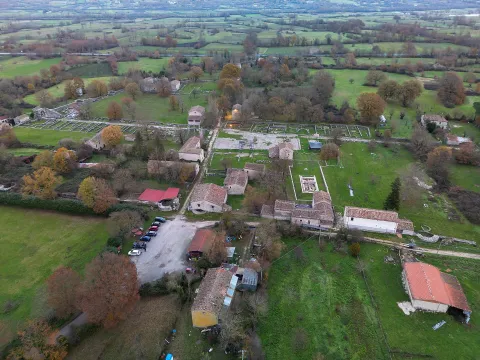
The remarkably preserved Augustan city walls define the urban perimeter. This work of precise military engineering stands 4.80 metres high and 1.80 metres thick, constructed from Matese limestone cut into small pyramids to form a regular opus reticulatum facing. Spaced 80 to 120 Roman feet apart along the curtain wall were circular towers. The 19 towers visible today measure seven metres in diameter and nearly 11 metres in height. They protrude three metres both outward, where they feature three defensive slits, and inward, equipped with three windows for urban surveillance. Access was granted through four monumental, single round-arched gates, 4.8 metres high, positioned at the ends of the cardo and decumanus. Each gate was flanked by two towers and backed by a cavaedium, a rectangular open-air security courtyard. A sliding wooden portcullis, operated from the patrol path via a stone staircase, secured the entrance.
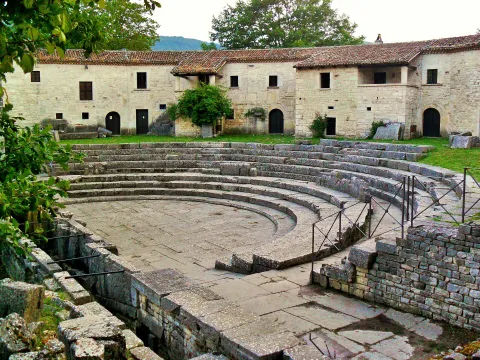
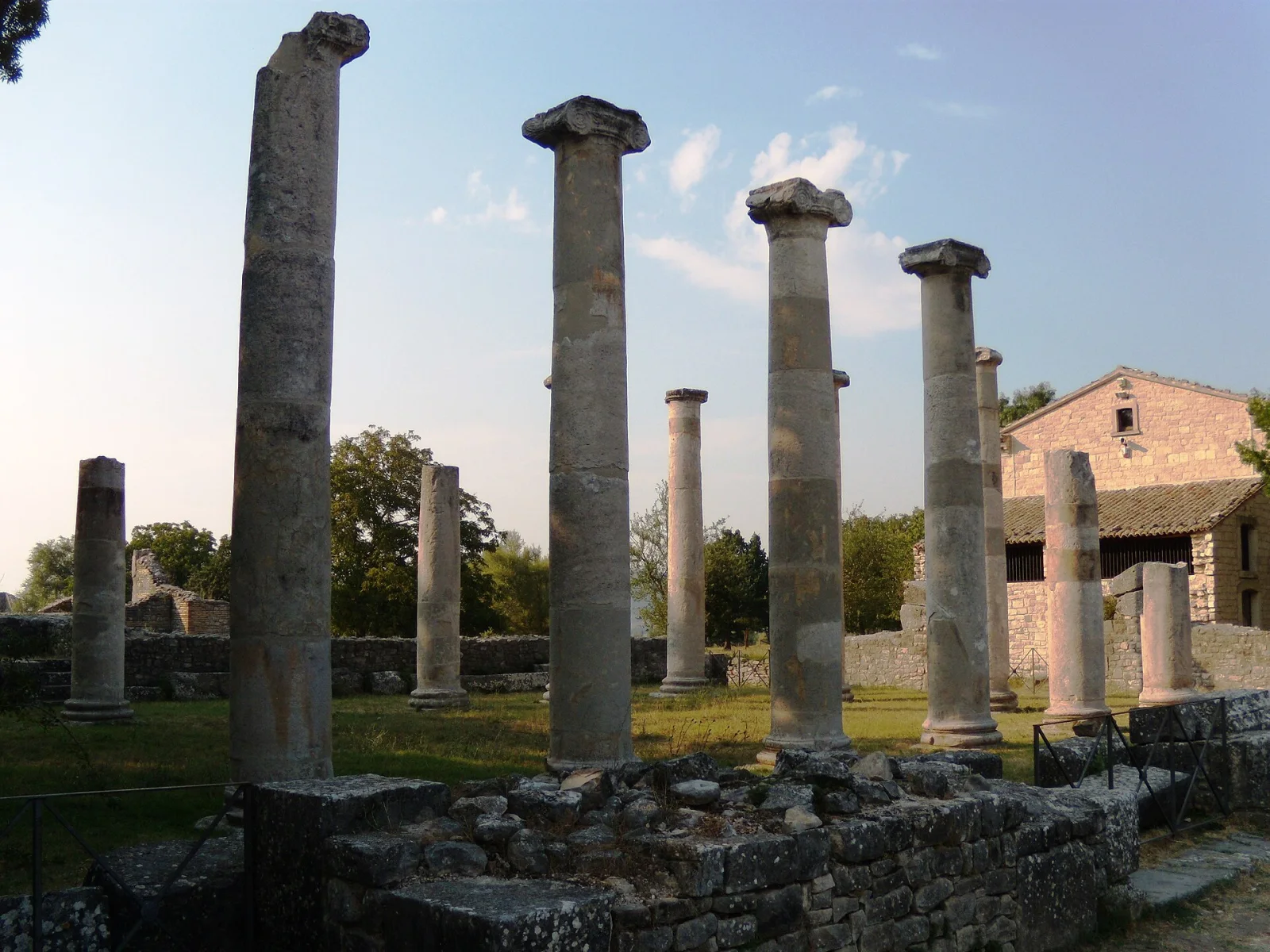
Within the walls lie the remains of a theatre and temples dedicated to Jupiter and Apollo. Excavations along the decumanus maximus, which follows the ancient transhumance route, have revealed industrial facilities from the early second century BC, including a tannery and a fullonica for wool processing. Furthermore, archaeological campaigns starting in 2023 unearthed an exceptional domus with a monumental entrance on the decumanus. This residence features a unique domestic hot water system, utilizing a large cylindrical lead vessel connected to distribution pipes.
Visiting
In 2021, the Italian Ministry of Culture established the "Parco Archeologico di Sepino" as an entity with special autonomy to manage the site. Extensive excavations took place between 1950 and 1955, while campaigns from 2010 focused on state-owned land, partially funded by state lottery revenues under Law 662/96. Sections of the walls have been consolidated using collapsed ancient materials, while unexcavated stretches are marked by scattered cement cores. In 2017, the site welcomed 20,305 visitors.
Our editors' tip
Look out for the gate leading toward Bovianum, where an important inscription dating to 168 AD remains intact. It is a rare ancient edict expressly forbidding the local population from harming the transhumant shepherds who drove their flocks along the grassy tracks.