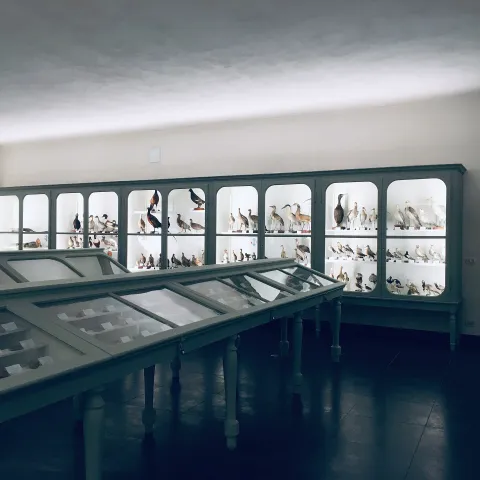
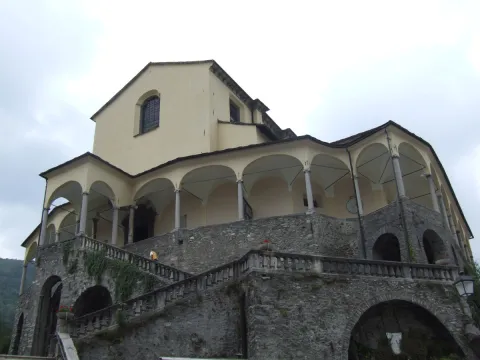
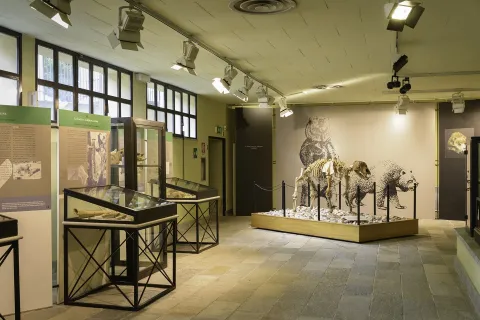
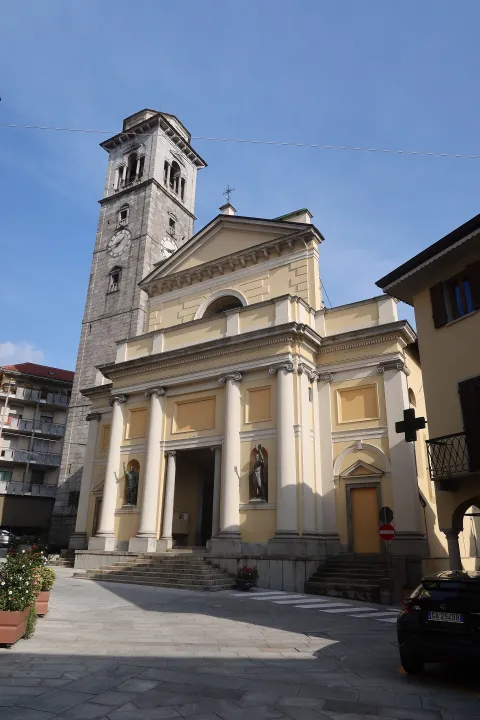
The palazzo dei Musei stands in via Pio Franzani, in Varallo, and holds two different institutions under one roof: the Pinacoteca, one of the earliest art collections in Piedmont, and the Museo Calderini, founded in 1867. The vocation for drawing goes a long way back: a school of drawing had opened in the town in 1778, and from 1831 it passed to the Società d'Incoraggiamento allo Studio del Disegno, whose name can still be read on the lintel of the entrance. Then in 1875 came the Società per la Conservazione delle Opere d'Arte e dei Monumenti in Valsesia, which counted the founding of a picture gallery among its aims.
What to see
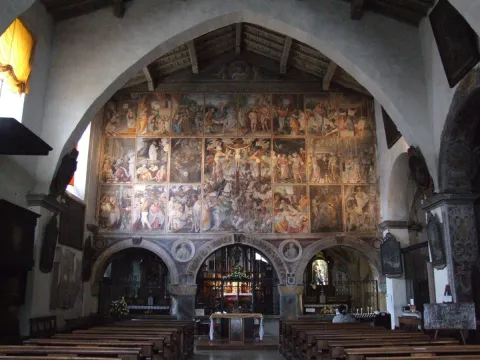
The Pinacoteca now holds about 3,300 paintings, sculptures, drawings, prints and furnishings, and tells the story of Valsesian art from the fifteenth to the nineteenth century. The piece that strikes hardest is the Lamentation over the Dead Christ: eight life-size wooden statues from the Milanese workshop of the De Donati brothers, brought down from the Sacro Monte and in all likelihood from the old chapel of the Deposition, which is why the group is known as the Stone of Unction. A whole hall is given to the valley's two great painters: by Gaudenzio Ferrari there are the Crucifixion painted around 1498 for Santa Maria delle Grazie, the Stigmata of Saint Francis and the four panels of the Doctors of the Church from the predella of the Gattinara polyptych; by Tanzio da Varallo the famous pair of David and Goliath and the Saint Roch that came from the parish church of Camasco. There are also the terracotta groups by Giovanni d'Enrico, Tanzio's brother and the maker of many statues on the Sacro Monte.
Visiting
The collection took shape by successive additions. It was born in 1885, when the Valsesian Art Exhibition was held during the celebrations for Gaudenzio Ferrari: the following year, with some of the works from that show, the first two rooms opened. The first curator was the painter Giulio Arienta, who also signed the first catalogue in 1902. Then came purchases and above all donations: the one from Bartolomeo Avondo, on 22 September 1915, was important enough that in order to accept it the Società had to be raised to a legally recognised body by royal decree. Only at the end of the nineteen-fifties did the Società buy most of the palazzo, so that the Pinacoteca could settle on the first and second floors; the Calderini occupies the second floor and some rooms on the ground floor.
Our editors' tip
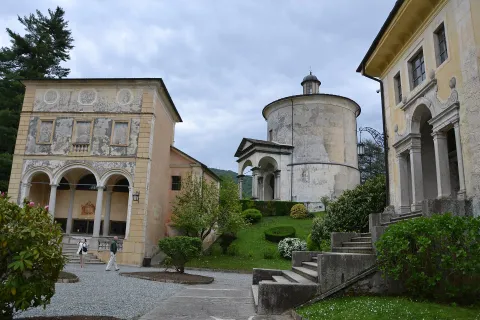
The palazzo is best visited after the Sacro Monte, not before. Many of the best things here came down from up there, the Lamentation, the panel of the Stigmata, the terracotta groups, and ended up in these rooms over the centuries: looking at them once you have walked the chapels means recognising the same hands, and understanding that the building site on the hill was for centuries what drew the artists of the valley. There is also a remarkable collection of drawings and sketches, largely from the Avondo family of painters, with sheets by Gaudenzio, Tanzio, il Cerano and il Morazzone: it rewards a slow look, and it is the part passing visitors almost always skip.