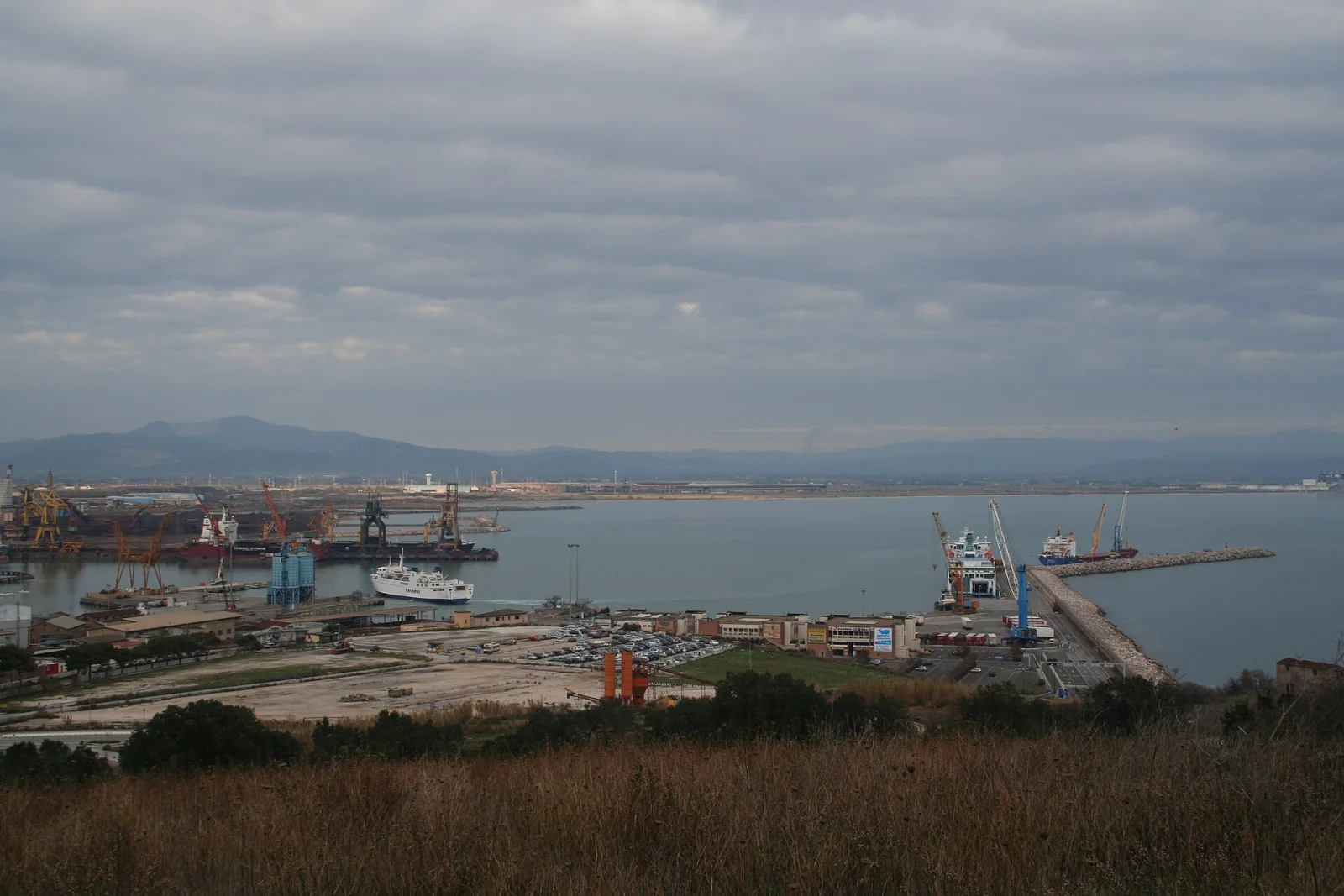
Piombino means «little Populonia»: it comes from Populino, and the town exists because Populonia died. In the fifth century the poet Rutilius Namatianus, sailing along the coast of Etruria, wrote that Populonia was by then a dead city — and on the same page he named for the first time the harbour of Falesia, the nucleus from which Piombino would grow. Populonia meanwhile was sacked again and again: by Totila's Goths, then by the Lombards, and bishop Cerbone had to take refuge on Elba. The last sack is of 809, and it was the work of the orobiti, Slav pirates who lived in the mountains of the Peloponnese. It was then that the few who remained came down to the port and began to build here.
The rest is a story of owners. In 1399 Gherardo d'Appiano sold Pisa to the Visconti for two hundred thousand florins and kept Piombino for himself: so was born an independent lordship that took in Populonia, Suvereto, Scarlino and the islands of Pianosa, Montecristo and Elba. Then through it passed Cesare Borgia, Cosimo de' Medici, the Ludovisi, the Boncompagni, and at last Elisa Bonaparte, whom Napoleon made princess of Lucca and Piombino — and who by a decree on public health deconsecrated a thirteenth-century church to turn it into a hospital. From piazza Bovio, a terrace suspended over the sea channel, you can see the whole Tuscan archipelago and, on clear days, Corsica: the promontory marks the boundary between the Ligurian and the Tyrrhenian sea. At Populonia, on the gulf of Baratti, stands the only great Etruscan city facing the sea, with its necropolises and tumulus tombs among the pines. The twentieth century, though, is steel: it was for the steelworks that the town was bombed, and the battle of Piombino of the tenth of September 1943 is held by historians to be one of the first pages of the Italian Resistance.