🔔 The Italian Almanac

October 20

Stories and curiosities for October 20, from the Italy of a thousand bell towers.

Vanished Italy

Civita di Bagnoregio, ten residents and a footbridge to get in

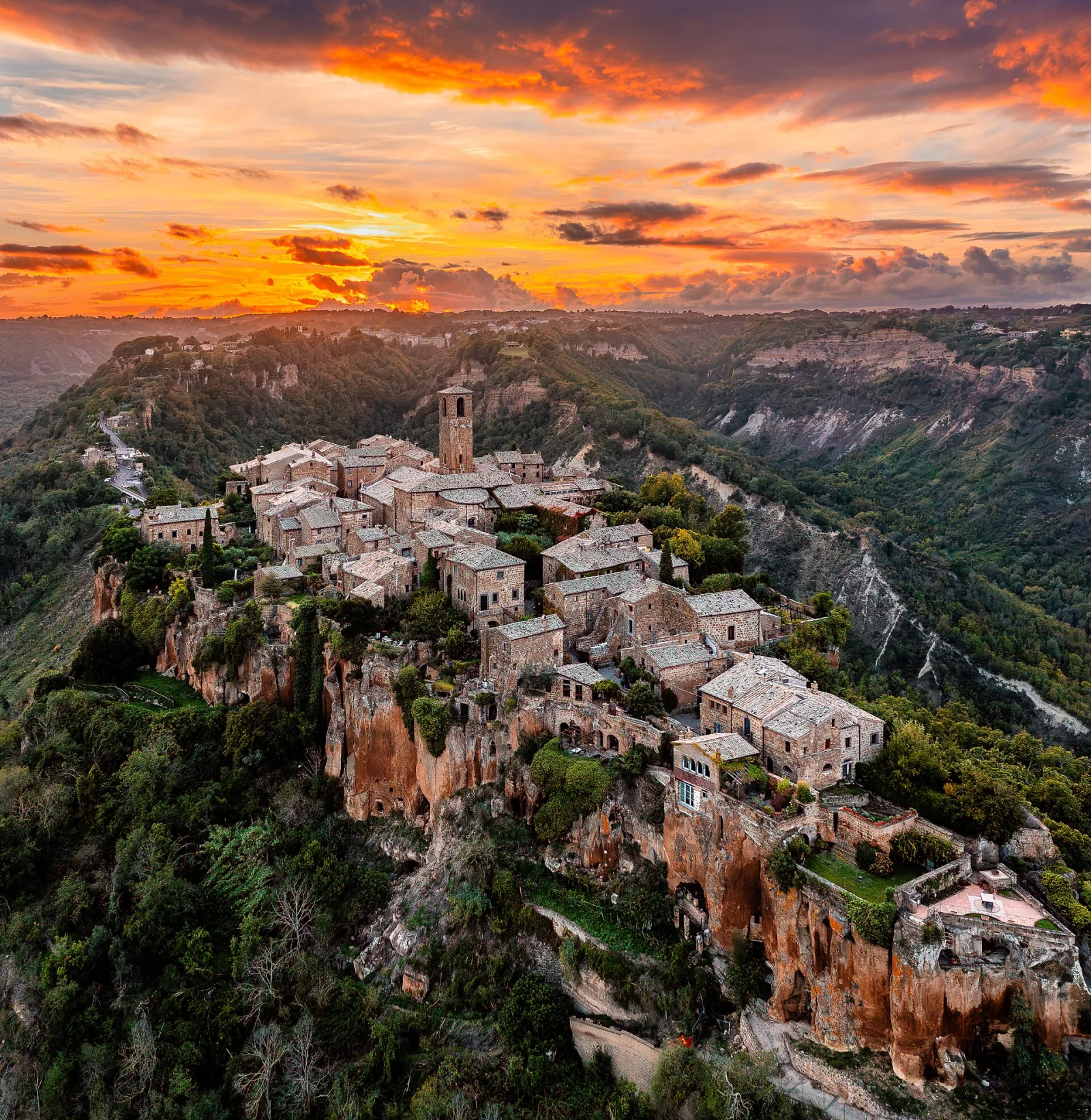
Civita, a hamlet of Bagnoregio in the province of Viterbo, in Lazio, sits on a slab of tuff resting on clay, and the clay gives way: for centuries the edges have crumbled, taking the houses with them. On 10 June 1695 an earthquake cut it off from the rest of the town, opening the ravine that still divides them; today the only way in is a reinforced-concrete footbridge built in 1965. The writer Bonaventura Tecchi, who spent his youth here, called it “the dying town”. In 2025 it had ten residents; visitors, 40,000 in 2010, were estimated at 850,000 in 2017, and since June 2013 there is an entrance fee. Here Giovanni Fidanza was born, known to the world as Saint Bonaventure.

📍 Discover Bagnoregio

Today's tidbits

It started here 1946

The Vespa was born in Pontedera, designed by an engineer who hated motorcycles

Pontedera, in Tuscany, had been bombed in the war because of Piaggio's aircraft works, in town since 1924. In 1945, with the workshops to rebuild, Enrico Piaggio wanted a vehicle for everyone: the first prototype, Renzo Spolti's “Paperino”, did not convince him; he called in Corradino D'Ascanio, an aeronautical engineer who detested motorcycles. Out came a scooter with a load-bearing body, shown in Turin on 24 March 1946 and patented in Florence on 23 April. Piaggio found the name in front of the prototype: “it looks like a wasp!”, vespa in Italian, for its buzz and its shape. In 1946, 2,484 were built; the millionth came in 1956, and the total now tops sixteen million.

📍 Pontedera →
Saying of the day

Better a dead man in the house than a Pisan at the door, Lucca's proverb

“Better a dead man in the house than a Pisan at the door”: the proverb belongs to Lucca, in Tuscany, and its roots are medieval, when the Republic of Pisa used to raid and plunder Lucca's countryside. Then it got worse: after the death of Castruccio Castracani, Lucca fell under Giovanni dell'Agnello, doge of Pisa, and only won its freedom back in 1370, thanks to Emperor Charles IV. From there a republic that lasted until 1799, inside sixteenth-century walls 4,223 metres long. When the Pisans hear the saying, they reply “Try it and see!” or “May God grant your wish!”. And another Tuscan proverb hands out the parts: Florentines blind, Sienese mad, Pisans traitors, Lucchesi lords.

📍 Lucca →