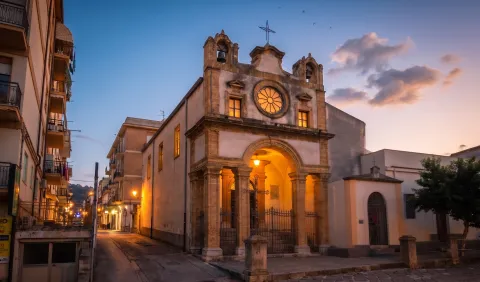
Housed inside the restored former stables of the Capuchin friary annexed to the Sanctuary of Gibilmanna, in the municipality of Cefalù, the Fra Giammaria da Tusa Museum preserves the spiritual, cultural, and material heritage of the Franciscan order. Its exhibits illustrate both monastic self-sufficiency and local devotion through a vast collection of sacred art, liturgical objects, historic documents, and regional craft tools.
What to see
The museum spans ten rooms, each dedicated to a prominent figure associated with the friary, such as Saint Francis, Saint Gregory the Great, convent founder Padre Sebastiano da Gratteri (1504–1580), and the builder friars Urbano and Sigismondo da Pollina. Notable artistic highlights include a marble Pietà sculpture by Cefalù native Jacopo del Duca (1522–1604), two 17th-century polychrome wooden statues of Mary and Joseph in adoration, and an oil painting by Ludovico Suriek depicting The Vision of Friar Felice da Cantalice. The display also features late 18th-century waxworks characteristic of the Val Demone area, carved Capuchin candlesticks, and a rare 17th-century pipe organ constructed with marsh reeds.
Glazed display cases hold embroidered vestments from the 17th to 19th centuries along with embossed Sicilian silver altarpieces, chalices, pyxides, and thuribles. The ethno-anthropological section showcases rural and convent life in the Madonie region: visitors can view a reconstructed blacksmith workshop, a carved and painted Sicilian cart, printing presses, host-making cutters, and traditional farming equipment. Special focus is given to historical implements used for harvesting ash tree manna—such as the specialized mannaruolu knife and rràsula scraper—as well as vintage tools for breadmaking, winemaking, and textile spinning.
The tour is completed by the Fra' Gesualdo da Bronte Library and Archive, which houses incunabula, the 1558 first edition of Tommaso Fazello's De Rebus Siculis, 17th-century Franciscan atlases, and archival records dating from the 16th century onward.
Our editors' tip
Be sure to examine the specialized set of historic implements used for collecting ash tree manna, as well as the unique 17th-century pipe organ made with marsh reeds.