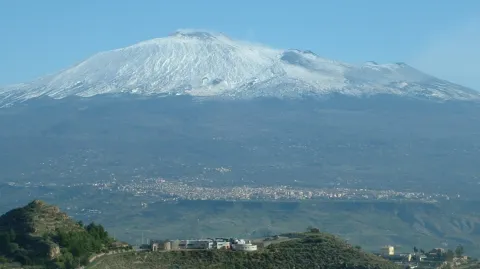
Adrano means black. The name is Sicanian, and its root is the same as Latin āter and Umbrian ādro: black, like the lava the town stands on. From the Normans until 1929 it was called Adernò, and its people were adernesi; today they are adraniti. The Greek town was founded in 400 BC by Dionysius the Elder of Syracuse, beside the temple of Adranos, the Sicel god of war, to keep watch over the Simeto valley and Centuripe on the far bank. In 344 Timoleon of Corinth, marching on Syracuse, beat the tyrant of Leontinoi here, and the town welcomed him in celebration and took him as its lord.
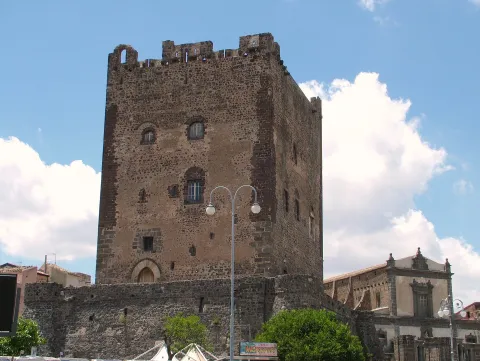
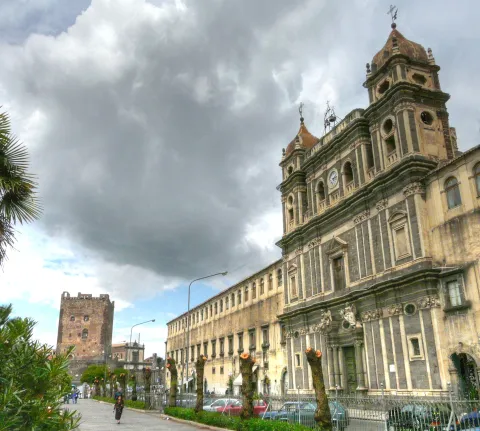
Of the polis there remain imposing stretches of wall, from via Catania to the chasm the adraniti call la Rocca; but the rest of the area is under intensive cultivation, pressed by building and by tomb robbers. The Norman castle, a square keep raised by count Roger, holds the museum with the Ephebe of Adrano and three thousand years of the Simeto. On the river, the Saracen bridge strides across gorges of basalt. But the moment is Holy Week: on Maundy Thursday the Christ at the Column is carried on shoulders with a step that goes three forward and one back; on Friday the bier of the dead Christ, called here U Lizzanti, passes among people who strike up an ancient funeral song; and on Sunday, in the square, comes the Diavolata, an eighteenth-century sacred drama in five scenes where at the end the archangel Michael defeats Lucifer. Then follows the Angelicata, and two angels bring the gifts. The carnival, for two years, was twinned with the one in Rio.