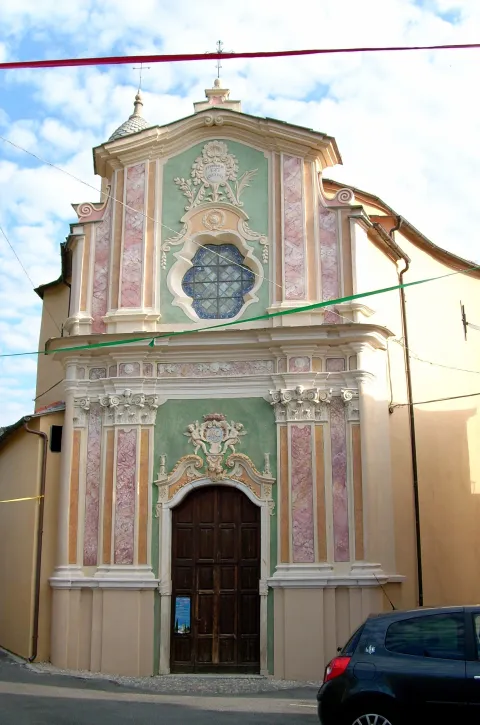
The patron saint of Lucinasco is Saint Antoninus, celebrated on 2 September. The parish church dedicated to him, in the historic centre, was rebuilt in the 18th century.
The first written and certified record of the territory of Lucinasco dates from 21 May 1154, when, having obtained investiture from the bishop of Albenga, Odoardo, the counts of Ventimiglia, Raimondo and Filippo, were charged with collecting tithes; the construction of the local castle, of which only a few ruins remain today, is thought to date from this period. Bound to the Municipality of Genoa from 1250, the counts of Ventimiglia dominated this part of the territory, of Prelà and of the Maro valley in an autonomous lordship: in 1234 an anti-feudal revolt broke out precisely in Lucinasco, suppressed in the autumn of that same year by the armed intervention of Genoese soldiers, followed by the authoritarian return of the counts and heavy reprisals, including payment of the huge war expenses caused by the revolt. In 1455 Count Gaspare di Ventimiglia sold his holdings to Onorato I Lascaris di Ventimiglia, Count of Tenda; the lordship of the Maro then passed to his son Gian Antonio II and finally to his daughter Anna, who in 1536 had to cede the fief to the banker Ansaldo Grimaldi to settle a debt, before the Lascaris family regained possession of it in 1544. Among the territory's other religious buildings stands the parish church of San Pantaleone in the hamlet of Borgoratto.